If your garden soil has become compacted, overrun with weeds, or needs a nutrient boost, a rotary cultivator might be the tool you have been missing. Designed for shallow, precise soil work, a rotary cultivator is used to aerate, mix, weed, and prepare topsoil without the aggressive disruption of heavier machinery. Unlike deep-tilling rototillers, this tool focuses on the top 1 to 6 inches of soil, making it ideal for maintaining established beds, vegetable rows, and flower gardens.
You will find rotary cultivators in handheld, walk-behind, and tractor-mounted forms, each tailored for specific scales of use. Whether you are blending compost into a raised bed or clearing weeds between crop rows on a farm, this tool delivers efficient, repeatable soil maintenance with minimal root disturbance. In this guide, we will break down exactly what a rotary cultivator is used for, how it differs from a tiller, and how to use it effectively across home gardens and large-scale operations.
Soil Aeration and Loosening
Break Up Crusted Topsoil
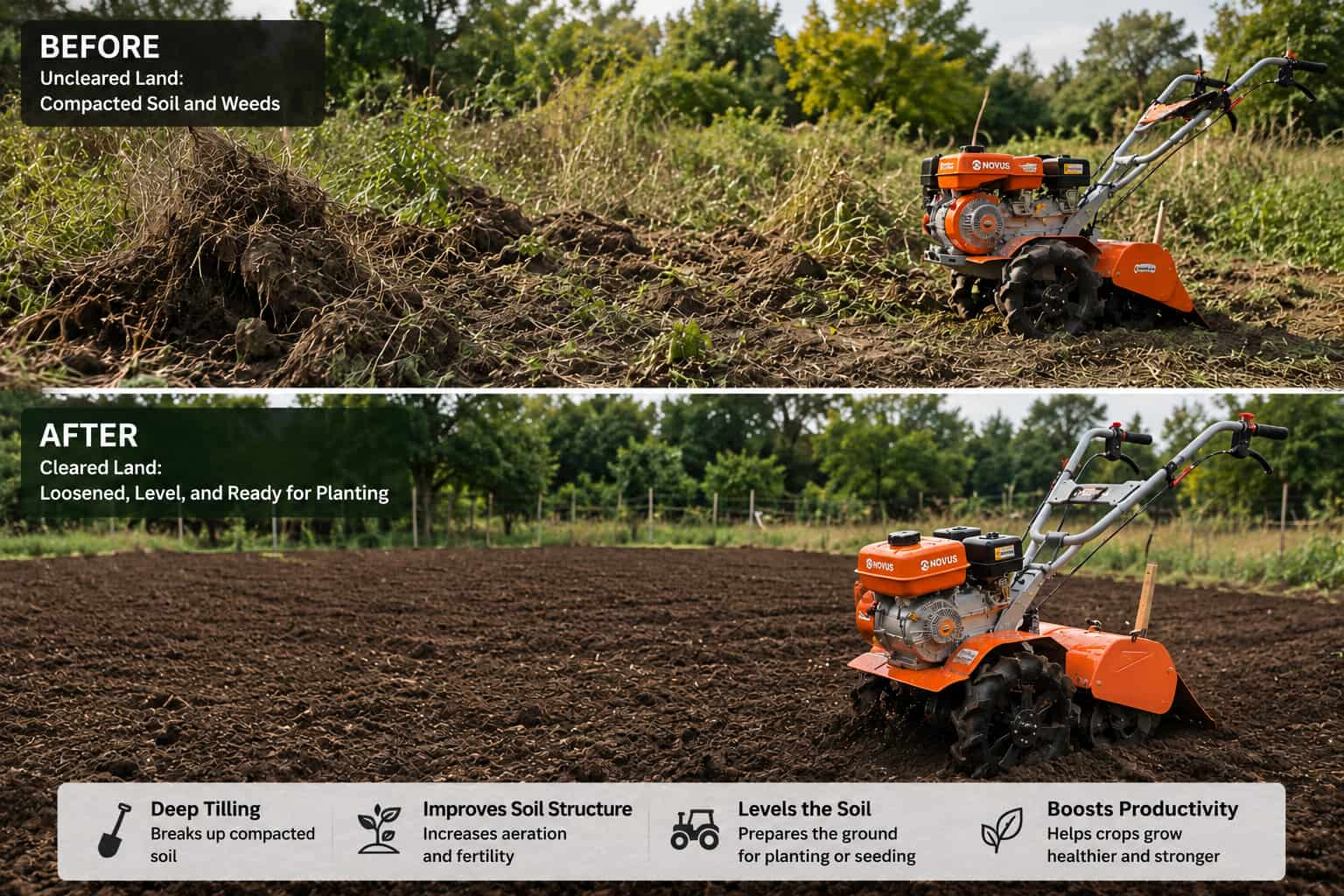
After heavy rain or irrigation, soil often forms a hard crust that blocks air, water, and emerging seedlings. A rotary cultivator quickly breaks this surface layer, restoring porosity. Its rotating tines penetrate just enough to loosen compacted topsoil while preserving deeper soil structure and beneficial microbial layers.
This shallow action prevents erosion and runoff, improving drainage and encouraging young roots to spread. Because it works at a controlled depth of 1 to 6 inches, it will not disrupt subsurface compaction, making it perfect for routine maintenance rather than initial ground-breaking.
Improve Air and Water Flow
Healthy soil needs oxygen and moisture movement. By creating small channels through tine rotation, a cultivator enhances gas exchange and infiltration. This is especially valuable in clay-heavy or overworked soils where density limits root growth.
Pro Tip: Run the cultivator when soil is slightly moist, not wet. Working soggy soil can worsen compaction and damage soil aggregates.
Incorporate Soil Amendments
Mix Compost and Fertilizers Evenly
One of the most common uses of a rotary cultivator is blending organic matter like compost, manure, or granular fertilizers into the topsoil. Instead of hand-raking or shoveling, you can cover a 4×8 bed in under a minute with a walk-behind model.
The rotating tines ensure amendments are evenly distributed without over-mixing, which helps maintain soil structure. This makes it ideal for top-dressing during the growing season, giving plants a mid-cycle nutrient boost without disturbing their roots.
Avoid Over-Tilling with Precision Control
Unlike deep tillers that invert soil layers and expose dormant weed seeds, a rotary cultivator works gently. You can set the depth and pass frequency to match your amendment type, shallow for compost and slightly deeper for slow-release fertilizers.
This precision supports no-till and reduced-till gardening where preserving soil biology is key. Repeated deep tilling harms earthworms and mycorrhizal fungi, but a cultivator lets you feed the soil without destroying its ecosystem.
Control Weeds Efficiently

Uproot Small Weeds Between Rows
Weed control is a major use of rotary cultivators, especially in vegetable gardens and row crops. The spinning tines slice through small weeds just below the surface, uprooting them before they compete with your plants for nutrients and water.
Because it operates shallowly, it avoids damaging deeper plant roots, making it safe to use within inches of growing crops like tomatoes, carrots, or lettuce. For best results, cultivate early in the season when weeds are young and soil is workable.
Use Specialized Attachments for Targeted Weeding
Some models come with hoe blades, weed knives, or slicing bars that target specific weed types. Slicing bars cut weed roots without turning soil. Spring tines flex over obstacles and disturb less soil. Disc attachments on tractor models slice through dense grass cover.
Expert Note: Cultivating every 7 to 10 days during early growth can reduce weed pressure by up to 90 percent, minimizing the need for herbicides or hand-pulling.
Prepare Seedbeds with Precision
Create Fine, Level Tilth for Planting
Before sowing seeds, you need a smooth, clod-free surface where seeds can make good contact with soil. A rotary cultivator breaks up soil clumps and levels the bed, creating the ideal tilth for germination.
It is often used as a secondary tillage tool after a deep tiller has broken new ground, so it does not replace initial soil preparation but perfects it. For large farms, tractor-mounted disc harrows or chain harrows finish seedbeds after primary plowing.
Match Depth to Crop Needs
Different crops require different seedbed conditions. Shallow depth of 1 to 2 inches works best for lettuce, carrots, and greens. Medium depth of 3 to 4 inches suits beans, peas, and beets. Deeper depth of 5 to 6 inches is ideal for potatoes and root vegetables.
Adjust the cultivator depth gauge or wheels to match your crop. This ensures uniform planting depth and consistent emergence.
Turn Under Cover Crops
Incorporate Green Manure Into Soil
Cover crops like clover, rye, or vetch enrich soil with nitrogen and organic matter. Once they bloom or reach maturity, a rotary cultivator chops and mixes them into the topsoil, speeding up decomposition.
This process, called rolling and crimping or incorporation, returns nutrients to the soil and improves texture. Shallow mixing at 4 to 6 inches ensures residue decomposes quickly without creating nitrogen lock-up from deep burial.
Warning: Do not bury cover crops too deeply. Residue in anaerobic lower layers can slow breakdown and temporarily tie up nitrogen.
Boost Soil Health Without Chemicals
In organic farming, turning under cover crops replaces synthetic fertilizers. A rotary cultivator enables this natural fertility cycle with minimal disturbance, supporting regenerative practices.
Over time, regular incorporation builds soil organic matter, increases water retention, and reduces erosion, all while suppressing weeds naturally.
Work Safely Around Growing Plants
Cultivate Near Vegetation Without Damage
One of the biggest advantages of a rotary cultivator is its ability to work close to established plants. Its limited depth and lighter tines avoid damaging roots that lie deeper than 6 inches.
This makes it perfect for berry patches, perennial flower beds, raised vegetable gardens, and young tree rows. You can maintain soil health mid-season without pulling up plants or compacting soil by walking.
Minimize Root Disturbance
Compared to a shovel or deep tiller, a rotary cultivator disturbs only the top layer, leaving root networks intact. This is crucial for crops like strawberries or asparagus that develop extensive shallow roots.
Pro Tip: Use a shield or guard attachment to protect plant stems when cultivating nearby.
Types of Rotary Cultivators
Handheld and Walk-Behind Models
Lightweight at 13 to 40 pounds and powered by electric motors or small gas engines, these are ideal for home gardens, containers, and raised beds. Electric models, both corded and cordless, are quiet, low-maintenance, and eco-friendly, best for small areas under 500 square feet. Gas-powered models offer more torque and runtime, handling tougher soil and larger plots. Manual non-motorized models are push or hand-cranked, limited to very small spaces.
A 13-pound electric model with 5 angled tines and a flip-over slicing bar can prep a raised bed in under 2 minutes.
Tractor-Mounted Cultivators
Used in commercial agriculture, these attach via three-point hitch or PTO and cover large areas efficiently. Spring tine cultivators feature flexible steel tines that adapt to uneven ground, reduce compaction, and manage residue. Disc harrows use angled metal discs to cut soil, break clods, and incorporate residue up to 6 to 8 inches deep. Chain harrows finish the job by leveling soil and improving seed-to-soil contact. Stubble cultivators are secondary tillage tools that follow ground contours for uniform depth.
Market Insight: The global cultivator market is projected to grow by USD 319 million from 2020 to 2024 due to rising demand in sustainable farming.
Key Design Features
Rotating Tines and Blades
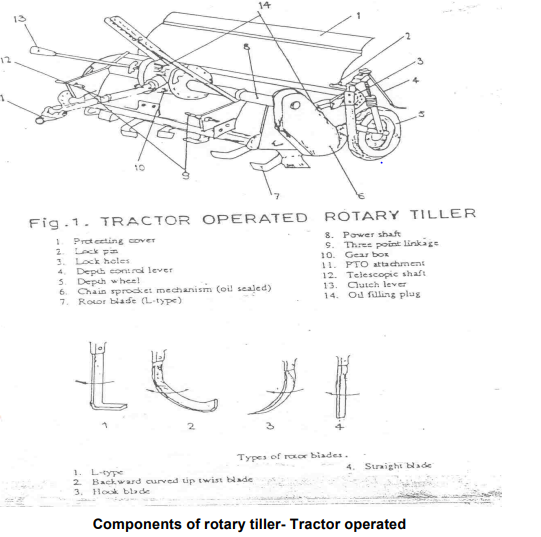
The heart of any rotary cultivator is its spinning tines or blades, typically made of hardened steel. They are arranged in staggered patterns for continuous soil engagement, spiral configurations for smoother operation, and angled setups to pull the machine forward. Spring tines flex over rocks and roots, reducing damage and bouncing. Disc blades on harrow models cut cleanly through residue.
Power Source Options
Choose based on your needs. Electric power is lightweight and quiet, great for urban gardens, but limited by battery life of 30 to 60 minutes. Gas power offers more power and runtime, ideal for gardens over 1,000 square feet, but requires maintenance. PTO power provides high power for field-scale work but requires compatible equipment. Manual power needs no fuel or electricity, best for tiny plots or spot work.
Adjustability for Custom Results
Most models offer depth control via handle height or gauge wheels, tine angle and spacing adjustments for soil type, and width of cut from 12 inches on handheld models to over 30 feet on large disc harrows. This flexibility lets you customize performance for sandy, clay, or loamy soils.
Cultivator vs. Tiller: Know the Difference
Different Tools for Different Jobs
While often confused, cultivators and tillers serve distinct purposes. A rotary cultivator is designed for maintaining soil, mixing, and weeding at 1 to 6 inches depth with low to medium power. A rotary tiller is designed for breaking new ground at 8 to 10 inches depth with high power.
A rotary cultivator weighs 13 to 40 pounds and is best for established beds and working around plants. A rotary tiller weighs 100 to 200 pounds and is best for new gardens and hard soil.
Analogy: Using a cultivator to break new ground is like using a butter knife to chop wood. It is the wrong tool for the job.
When to Use Each
Use a cultivator when weeding between rows, mixing in compost, loosening after rain, or preparing seedbeds as a secondary step. Use a tiller when converting lawn to garden, breaking hard compacted soil, or starting a new plot.
Applications by Use Case
Home Gardening
For backyard growers, a rotary cultivator saves time and effort. It mixes compost into tomato beds, weeds between carrot rows, prevents crusting in seed trays, and maintains raised beds without heavy lifting. An electric model can handle most residential plots with minimal noise or emissions.
Commercial Agriculture
On farms, cultivators support inter-row cultivation in crops like corn, cotton, soybeans, and vegetables. They also manage stubble after harvest, prepare seedbeds, and incorporate cover crops, reducing herbicide reliance in organic systems.
Landscape and Turf Management
Landscapers use cultivators to prepare soil for sod or seed, aerate compacted lawns, and level uneven areas before reseeding. Chain harrows are especially popular for sports fields and golf courses.
Organic Farming
Rotary cultivators are essential in chemical-free systems. They provide mechanical weed control, build soil via green manures, and reduce compaction with light tillage. They support long-term soil health and sustainability.
Operating Tips for Best Results
Run at Full Throttle
For consistent tine speed and effective soil engagement, operate at full engine RPM. Slower speeds reduce efficiency and can cause clogging.
Use Optimal Ground Speed
Move steadily. Too fast and you will miss spots. Too slow and you will overwork the soil. Most walk-behind models perform best at walking pace of 2 to 3 miles per hour.
Make Multiple Passes if Needed
For heavy residue or dense weeds, two or three perpendicular passes ensure thorough coverage. The first pass breaks clumps. The second pass smooths and finishes.
Clean After Every Use
Remove soil buildup from tines and undercarriage to prevent rust and corrosion. Wipe down electric components and store in a dry place.
Safety and Maintenance
Wear Protective Gear
Always use gloves, safety goggles, closed-toe shoes, and ear protection for gas models. Flying debris can cause injury, especially in rocky soil.
Avoid Slopes and Obstacles
Do not operate on steep inclines unless the model is designed for it. Watch for rocks, roots, and irrigation lines to avoid damage.
Lubricate Moving Parts
On PTO and tractor models, grease bearings and joints regularly. Check tine bolts for tightness before each use.
Replace Worn Tines
Inspect tines for bending, chipping, or wear. Replace in pairs to maintain balance and performance.
Frequently Asked Questions About Rotary Cultivators
What is the primary difference between a rotary cultivator and a tiller?
A rotary cultivator works at shallow depths of 1 to 6 inches and is designed for maintaining established soil, mixing amendments, and controlling weeds. A tiller works deeper at 8 to 10 inches and is designed for breaking new ground and hard, compacted soil.
Can a rotary cultivator be used on rocky soil?
rotary cultivators can handle some rocks, but very rocky soil may damage tines or cause the machine to jump. Spring tines offer more flexibility over obstacles, but extremely rocky conditions may require a heavier tiller or manual preparation.
How deep does a typical rotary cultivator work?
Most rotary cultivators work at depths between 1 and 6 inches. This shallow range makes them ideal for topsoil maintenance without disturbing deeper soil layers or plant roots.
Is an electric rotary cultivator powerful enough for a large garden?
Electric models work well for gardens up to about 1,000 square feet. For larger areas, gas-powered models offer more torque and longer runtime. Tractor-mounted cultivators are best for commercial-scale operations.
Can I use a rotary cultivator around established plants?
Yes, rotary cultivators are designed to work safely near established plants because they operate at shallow depths that avoid damaging deeper plant roots. Using a shield or guard attachment provides additional protection for delicate stems.
Key Takeaways for Using a Rotary Cultivator
A rotary cultivator is a precision tool designed for shallow soil work at 1 to 6 inches depth, making it ideal for aerating, weeding, mixing amendments, and preparing seedbeds in established gardens. Unlike deeper tillers, it preserves soil structure and plant roots, allowing safe use around growing crops. Choose the right type based on your needs: handheld or walk-behind models for home gardens, tractor-mounted units for commercial agriculture. Operating at full throttle, maintaining proper ground speed, and performing regular maintenance ensures optimal performance and extends the life of your equipment.