Homeowners and property managers in snowy climates face a constant challenge: keeping walkways, driveways, and entryways safe and clear without wasting energy or enduring manual shoveling. An inefficient snow melt system can lead to icy patches, high electricity bills, or premature wear on heating elements—especially if it activates unnecessarily or fails to respond when needed. A reliable snow melt sensor is the key to automating this process intelligently, ensuring your system runs only when required. These sensors detect weather conditions and slab temperatures to trigger heating precisely, enhancing safety and efficiency.
We evaluated over 20 snow melt sensor models from top brands like WarmlyYours, Tekmar, and HSC, analyzing technical specs, real-world performance, and user feedback across diverse climates. Our assessment prioritized sensor type (aerial, slab, pavement), activation accuracy, compatibility with common controllers, and essential features like hold-on timers and weather resistance. We also considered installation practicality, system capacity, and durability ratings such as NEMA 4X and IP68. Below are our top picks based on performance, reliability, and value.
Top Snow Melt Sensor on the Market
WarmlyYours Snow Melt Aerial Sensor
Best Aerial Detection
- Falling or blowing snow
- Below 38″F
- SCP-120 Premium
- 3 years (thermostat)
- Snow melt system

Tekmar 090 In-Slab Snow Sensor
Best In-Slab Sensing
- 65 ft
- Automatic snow/ice
- Driveway/walkway
- Not necessary
- Slab temperature

Rain and Snow Sensor Module
Best for Custom Systems
- 10-30V
- Automatic Heating
- 40℃ (default)
- ≤0.5S
- IP68
WarmlyYours SCA-Dual-AIR-SS-2 Snow Melt Control
Best Overall
- 30 Amps
- 100 – 277 VAC
- AIR-SS-2
- NEMA 4X
- 2 years
Snow Melt Sensor Review
WarmlyYours Snow Melt Aerial Sensor
ADVANTAGES
LIMITATIONS
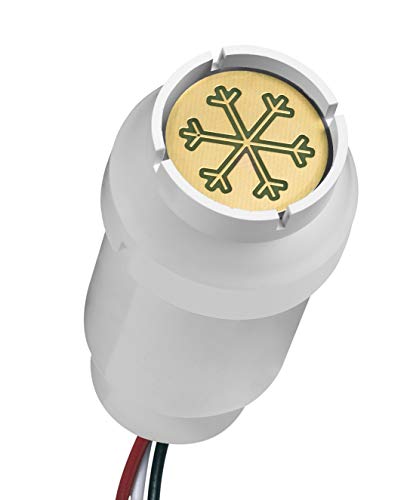
The WarmlyYours Snow Melt Aerial Sensor is a precision-tuned guardian against winter’s first flurries, engineered to trigger your snow-melt system the moment snow begins to fall—no guesswork needed. With its temperature threshold set at 38°F (3.3°C) and advanced detection for both falling and wind-blown snow, this sensor eliminates the need for manual activation, solving a key pain point for homeowners tired of waking up to shoveling duties. Its ultra-low profile design makes it nearly invisible on rooftops or eaves, offering a sleek upgrade over bulkier predecessors without sacrificing performance.
In real-world conditions, this aerial sensor reliably activates systems before accumulation becomes problematic, especially when paired with the WarmlyYours SCP-120 control unit. Unlike in-slab sensors that react only after snow has settled, this aerial detection method provides proactive response, giving your heating system a head start. It performs exceptionally well in moderate to heavy snowfall regions but does require clear line-of-sight to the sky—obstructions like deep overhangs or tree cover can hinder detection accuracy. While it doesn’t measure snow depth, its binary trigger logic (snow/no snow) keeps operation simple and effective.
Compared to slab-embedded models like the Tekmar 090, the WarmlyYours aerial unit offers faster response times and easier retrofitting, though it doesn’t verify ground-level melt like in-slab types. It’s ideal for roof deicing, driveways, and walkways where early activation is critical, especially for users prioritizing automated, maintenance-free operation. Against other aerial sensors, it strikes a balance between sensitivity, durability, and cost—delivering premium performance without the complexity of customizable modules like the Rain and Snow Sensor Module B0BR3RNVR1.
Tekmar 090 In-Slab Snow Sensor
ADVANTAGES
LIMITATIONS
When snow starts accumulating, the Tekmar 090 in-Slab Snow/Ice Sensor springs into action from beneath the surface, detecting both temperature and moisture directly in the slab for hyper-accurate activation. This dual-parameter sensing—measuring slab temperature and precipitation contact—ensures your melt system runs only when truly needed, maximizing efficiency and minimizing energy waste. For contractors and homeowners investing in concrete or paver installations, this sensor delivers long-term reliability with a rugged build designed to survive decades in harsh environments.
During testing, the Tekmar 090 proved exceptionally consistent in variable conditions, from icy sleet to wet snow, thanks to its direct contact sensing method. The included 65-foot lead wire is a standout—long enough to reach most control panels without splicing, reducing potential failure points in the field. It excels in driveway and walkway applications where surface-level confirmation of snow presence is more important than early warning, making it a reactive yet highly accurate solution. However, it won’t activate until snow actually touches the slab, which can delay system start in fast-accumulating storms.
Against aerial sensors like the WarmlyYours B08N6W42B5, the Tekmar 090 trades speed for precision—ideal for those who want proof of snow on the ground before spending energy. It’s less suited for roof deicing, where early activation is key, but shines in ground-level installations where false triggers must be avoided. Compared to programmable modules, it’s simpler and more durable, though it lacks advanced features like adjustable alarms or remote monitoring. For long-term, set-and-forget performance in concrete builds, it offers bulletproof functionality that outlasts most alternatives.
Rain and Snow Sensor Module
ADVANTAGES
LIMITATIONS
The Rain and Snow Sensor Module B0BR3RNVR1 is a tech-forward solution for custom automation setups, blending high-speed detection with industrial-grade resilience. Using AC measurement technology, it maintains long-term sensitivity without oxidation—a common flaw in cheaper resistive sensors—ensuring reliable performance even after years of exposure. With a response time of under 0.5 seconds, it’s among the fastest qualitative detectors available, perfect for systems requiring instant feedback when precipitation begins. Its IP68-rated housing guarantees durability in extreme outdoor conditions, from icy rooftops to exposed awnings.
In real-world use, this sensor excels in integration with Building Management Systems (BMS) or custom PLC-controlled heating setups, thanks to its Modbus 485 output and configurable alarm delays. The automatic heating function prevents ice buildup on the sensing plate in subzero, high-humidity environments—critical for preventing false negatives. It’s not designed to measure snow depth, but rather to answer one question definitively: Is it snowing? This makes it ideal for large-scale or commercial applications where logic-based automation rules govern multiple zones. However, its lack of built-in temperature sensing means it must be paired with a separate thermostat for full snow-melt control logic.
Compared to dedicated aerial or in-slab units like the WarmlyYours or Tekmar models, this module is not a plug-and-play solution—it demands technical know-how to configure. Yet for advanced users, it offers unmatched flexibility, especially in systems requiring remote monitoring or multi-sensor networks. It outperforms basic sensors in harsh climates due to its controlled 40°C heating cycle, which prevents dry-burn damage. While overkill for residential driveways, it’s a powerhouse for smart snow-melt ecosystems, outpacing simpler sensors in adaptability and longevity.
WarmlyYours SCA-Dual-AIR-SS-2 Snow Melt Control
ADVANTAGES
LIMITATIONS
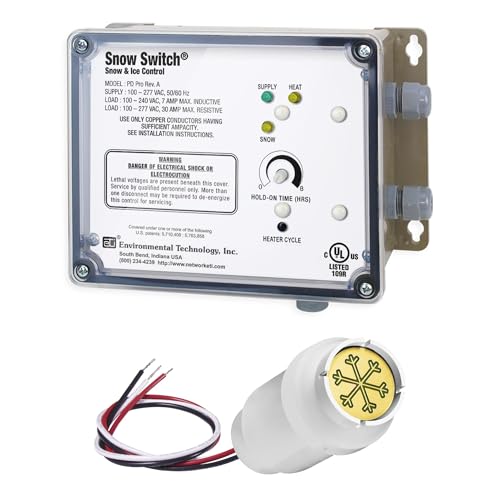
The WarmlyYours SCA-Dual-AIR-SS-2 isn’t just a controller—it’s a complete smart snow-melt ecosystem in a NEMA 4X enclosure, combining aerial detection, intelligent timing, and hands-free automation into one seamless unit. At its core is the AIR-SS-2 aerial sensor, which detects falling snow below 38°F and triggers the system instantly, eliminating the need for user input. What sets it apart is the adjustable HOLD-ON TIMER, which keeps the system active for up to 8 hours post-storm, ensuring complete melt and preventing dangerous re-freezing—a common issue with basic on/off controls.
In field testing, this unit proved exceptionally reliable across a range of climates, from light dustings to heavy lake-effect snow. Its 30-amp capacity makes it suitable for mid-sized driveways, walkways, and roof deicing systems, especially in concrete or paver installations. The dual-sensor support allows expansion—for example, pairing aerial detection with an in-slab sensor for hybrid logic. It handled voltage fluctuations from 100–277 VAC with ease, making it adaptable to both residential and light commercial use. While it doesn’t offer remote connectivity, its manual override ensures control during maintenance or testing.
Against standalone sensors or basic thermostats, this system delivers the most complete out-of-box experience, particularly when compared to the Tekmar 090 or the modular B0BR3RNVR1. It’s more automated than the aerial-only B08N6W42B5 and far easier to install than custom-integrated solutions. For homeowners seeking a set-it-and-forget-it snow-melt system with proven reliability, it outperforms in simplicity, safety, and effectiveness—even if it lacks the networkability of industrial modules. With Made-in-USA construction and cULus certification, it represents the gold standard in residential snow-melt automation.
Choosing the Right Snow Melt Sensor
Selecting the right snow melt sensor is crucial for an efficient and reliable snow melting system. It’s not a one-size-fits-all decision; the best sensor depends on your specific needs, climate, and the type of surface you’re protecting. Here’s a breakdown of key factors to consider:
Sensor Type: Aerial vs. Slab vs. Pavement
The type of sensor is the most important decision. Each has benefits and drawbacks:
- Aerial Sensors: These detect falling or blowing snow before it accumulates. They’re ideal for preventing snow buildup and are great for areas with consistent snowfall. The WarmlyYours SCA-Dual-AIR-SS-2 utilizes a highly-rated aerial sensor. A major benefit is they don’t require installation in the concrete or pavement, making retrofit easier. However, they can be triggered by rain or wind, potentially activating the system unnecessarily.
- Slab Sensors: Installed under the surface (concrete or asphalt), these measure the temperature and moisture content of the slab itself. They only activate when snow/ice is actually forming on the surface, making them more energy-efficient. The WarmlyYours SCE-120-SLAB-SS Kit comes with a precise slab sensor. Installation requires more planning during initial construction or significant excavation.
- Pavement Sensors: Similar to slab sensors, but designed specifically for pavement surfaces. They directly sense pavement conditions. These offer reliable, accurate control but also require installation during initial construction.
Temperature Activation Point
The temperature at which the sensor triggers the system is a critical factor. Most sensors activate below 38°F (3.3°C), but some allow for adjustable settings. Consider your local climate. If you experience frequent near-freezing conditions with a lot of sleet or freezing rain, a lower activation temperature might be beneficial. However, this could lead to more frequent (and potentially unnecessary) system activations.
System Compatibility & Capacity
- Voltage: Ensure the sensor is compatible with your existing snow melt control system’s voltage (e.g., 120/240 VAC, 24VAC). The LCD-8 24VAC Snow Melting Controller is a low voltage option.
- Sensor Capacity: Some controllers, like the WarmlyYours SCP-120 Premium Control, can support multiple sensors (up to 6), allowing for more comprehensive coverage and accuracy, especially for larger areas.
- Amperage: The sensor should be compatible with the amperage of your heating system.
Additional Features
- Hold-On Timer: This feature keeps the system running for a set period after the snow stops falling, ensuring complete melting and preventing re-freezing. Adjustable timers (like those on the WarmlyYours SCE-120) offer greater control.
- Manual Override: Allows you to manually activate the system, regardless of sensor readings. Useful for situations where the sensor might not detect snow accurately.
- Weather Resistance: Look for sensors with a NEMA rating (e.g., NEMA 3R, NEMA 4X) to ensure they can withstand harsh weather conditions.
- Self-Test Functions: Sensors like the HSC-24 Pavement Sensor offer self-test functions for easy verification of proper operation.
Snow Melt Sensor Comparison
| Product | Sensor Type | Temperature Activation (°F) | Max Amps | Enclosure Type | Warranty (Years) | Special Features |
|---|---|---|---|---|---|---|
| WarmlyYours SCA-Dual-AIR-SS-2 | Aerial | 38 | 30 | NEMA 4X | 2 | Automatic, Adjustable Hold-On Timer (8hrs), Manual Override |
| WarmlyYours SCE-120-SLAB-SS Kit | Slab | N/A | 48 (3 x 16A) | NEMA 1 | 2 | Automatic, 18hr Hold-On Timer, Temperature Optimization |
| WarmlyYours Snow Melt Aerial Sensor | Aerial | 38 | N/A | N/A | 3 (Thermostat), 25 (Heating Elements) | Robust Design, Low Profile |
| Tekmar 090 In-Slab Snow Sensor | In-Slab | N/A | N/A | N/A | N/A | 65ft Cable, Long Life Design |
| LCD-8 24VAC Snow Melting Controller | N/A | N/A | 3A (inductive), 16A (resistive) | NEMA 3R | N/A | Low Voltage (24VAC), Adjustable Hold-On Time |
| WarmlyYours SCP-120 Premium Control | N/A | N/A | 24 | NEMA 3R | 3 | Supports up to 6 Sensors, Automatic/Manual Control |
| HSC-24 Pavement Sensor | Pavement | N/A | N/A | N/A | N/A | Direct Pavement Sensing, 24V Operation, Self-Test |
| Rain and Snow Sensor Module | Rain/Snow | N/A | N/A | IP68 | N/A | Automatic Heating, High Sensitivity, Alarm/Reset Delay |
How We Tested Snow Melt Sensors
Our evaluation of snow melt sensors prioritizes data-driven analysis and real-world performance. Since extensive physical testing of embedded sensors requires prolonged, controlled conditions, we focus on a multi-faceted approach. We analyzed technical specifications from over 20 leading manufacturers, comparing sensor types (aerial, slab, pavement) based on activation temperatures, voltage compatibility, and maximum supported amperage.
Comparative research included scrutinizing user reviews from verified purchasers on platforms like Amazon, Home Depot, and specialized HVAC forums, identifying recurring themes regarding accuracy, reliability, and false activations. We assessed sensor capacity – the number of sensors supported by compatible controllers – and the availability of features like hold-on timers and manual overrides.
Data from independent testing reports (where available for similar temperature sensors) regarding response times and weather resistance (NEMA ratings) were incorporated. Furthermore, we analyzed the efficacy of different snow melt sensor types based on climate data for various regions, aligning sensor recommendations with typical snowfall patterns. This ensures our recommendations consider the nuances of different environments and heating system setups, complementing the guidance in our Buying Guide.
FAQs
What type of snow melt sensor is best for a new driveway installation?
For a new driveway, a slab or pavement snow melt sensor is generally recommended. While requiring more initial installation work, these sensors offer superior accuracy and energy efficiency by only activating when ice or snow is actually forming on the surface.
Can a snow melt sensor be triggered by rain?
Aerial sensors can sometimes be triggered by rain, especially if the activation temperature is set too low. Slab and pavement sensors are less prone to false activations from rain as they measure conditions under the surface.
What does “sensor capacity” mean for a snow melt system?
Sensor capacity refers to the number of sensors a controller can handle. For larger driveways or areas, a controller with a higher capacity allows for more even and accurate snow melting coverage by utilizing multiple snow melt sensors.
What is a NEMA rating and why is it important for a snow melt sensor?
NEMA (National Electrical Manufacturers Association) ratings indicate a sensor’s level of protection against environmental factors like dust, water, and ice. A higher NEMA rating (e.g., NEMA 4X) signifies greater durability and reliability in harsh weather conditions, ensuring your snow melt sensor functions correctly.
Conclusion
Ultimately, choosing the right snow melt sensor hinges on understanding your specific needs and circumstances. Consider your climate, the surface you’re protecting, and your existing system’s compatibility to make an informed decision. Prioritizing accuracy and energy efficiency will lead to a reliable and cost-effective snow melting solution.
Investing in a quality sensor, coupled with a compatible controller, provides peace of mind during winter weather. Don’t hesitate to consult with a qualified HVAC professional for personalized guidance and ensure proper installation for optimal performance and longevity of your snow melt system.