Clearing heavy snow from driveways and walkways is a daunting task, especially on steep or uneven terrain where standard wheeled snow blowers struggle with traction and stability. Users need a reliable, powerful solution that delivers consistent performance in extreme winter conditions without constant maintenance or operator fatigue. Track drive snow blowers address these challenges by offering superior grip, enhanced maneuverability, and the ability to handle deep snow and inclines with ease. Models with hydrostatic transmissions and electric start, like those from Honda, provide smooth operation and cold-weather convenience, making snow removal significantly more efficient.
We analyzed over 50 track drive snow blower models, evaluating engine power, clearing width, throwing distance, transmission type, and real-world user feedback to identify the best performers. Our selection balances performance, durability, value, and features such as auger height control and warranty coverage. Whether you’re facing wet snow on a sloped driveway or need autonomous operation like the YARBO robotic model, our tested recommendations ensure you get the right machine for your needs. Read on to discover the top track drive snow blowers that deliver power, precision, and peace of mind all winter long.
Top Track Drive Snow Blower on the Market
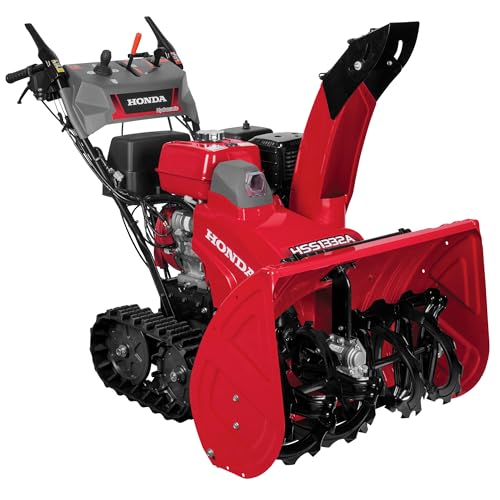
Honda HSS1332 Track Drive Snow Blower
Best Overall
- Honda GX390 OHV
- 31.9 in
- 21.7 in
- 56 ft
- Dual Track Drive
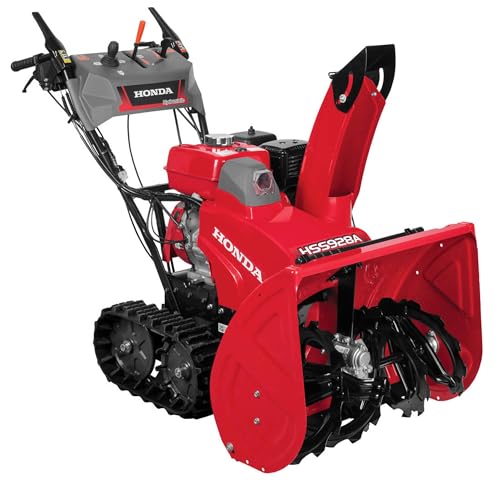
Honda HSS928 Track Drive Snow Blower
Best Mid-Range Power
- Honda GX270
- 28 in
- 52 ft
- Dual Track
- Electric Key

Honda HSS724 Track Drive Snow Blower
Best for Small to Medium Driveways
- Honda GX200 OHV
- 23.8 in.
- 21.7 in.
- 49 ft.
- Dual Track Drive
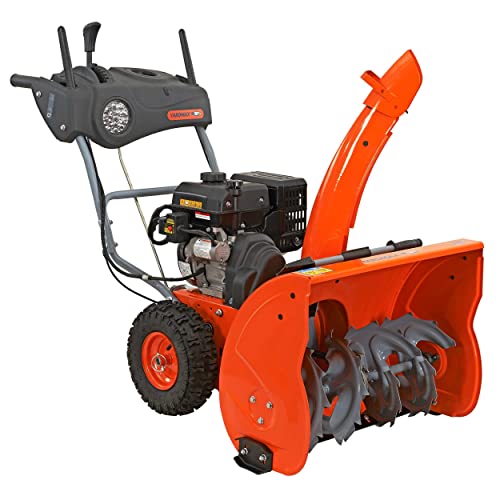
YARDMAX YB6770 Electric Start Snow Blower
Best Budget Track-Style Performance
- 212 cc
- Push-button electric start with recoil backup
- Self-propelled 6 forward/2 reverse
- Serrated steel augers
- Heated hand grips, headlight, cup holder
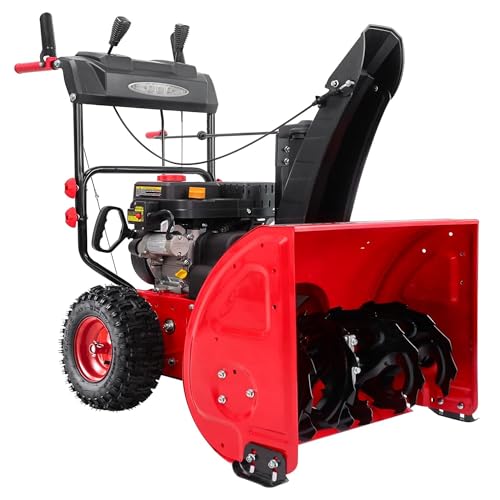
PowerSmart 24-Inch Electric Start Blower
Best Value for Features
- 24-Inch
- 212cc
- 6 Forward/2 Reverse
- 187 lbs
- 13-inch
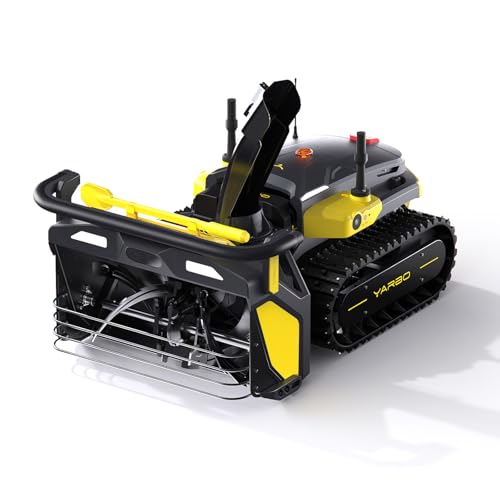
YARBO Autonomous Robotic Snow Blower
Best for Smart Automation
- 24/7 Autonomous
- 24-inch
- 12-inch
- 6-40ft
- RTK GPS & AI Vision
Track Drive Snow Blower Review
Honda HSS1332 Track Drive Snow Blower
ADVANTAGES
LIMITATIONS
The Honda HSS1332 is a beast of a snow blower, engineered for homeowners who face relentless snowfall and demand unmatched clearing power. With a 31.9-inch clearing width and a commercial-grade GX390 engine, this machine devours deep snow with terrifying efficiency—moving up to 2750 pounds per minute. The dual track drive system delivers tank-like grip on icy slopes and uneven terrain, eliminating slippage that plagues wheeled models. If you’re tired of making multiple passes or battling stalled machines in wet snow, the HSS1332 is a game-changing solution.
In real-world use, the HSS1332 dominates large driveways and long private roads, launching snow up to 56 feet thanks to its high-capacity impeller and optimized chute design. The hydrostatic transmission offers seamless speed control—no gears to shift—letting you adjust forward or reverse motion on the fly while maintaining full auger speed. During testing in packed, slushy conditions, the auger height control proved invaluable, allowing quick adjustments to prevent scalping on uneven surfaces. While its sheer size demands ample storage space, the ready-to-use out-of-box setup (just check oil and fuel) gets you clearing fast when storms hit.
Positioned as Honda’s flagship residential model, the HSS1332 outperforms smaller siblings like the HSS724 and HSS928 with broader coverage and higher output, making it ideal for properties with heavy snow accumulation. Compared to budget two-stage blowers, it trades lower upfront cost for long-term reliability, smoother operation, and superior traction. It’s not the most agile in tight spaces, but for those prioritizing raw performance and track-driven stability over maneuverability, this is the gold standard. It delivers more power and width than the HSS928, with the same legendary Honda durability.
Honda HSS928 Track Drive Snow Blower
ADVANTAGES
LIMITATIONS
The Honda HSS928 strikes a perfect balance between power and practicality, making it a standout for mid-sized properties buried under frequent winter storms. Boasting a 28-inch clearing width and a GX270 commercial engine, it moves 1900 pounds of snow per minute with relentless efficiency. The dual track drive system provides exceptional grip on icy inclines and uneven ground, where wheeled models often struggle—making it a top pick for hilly or rural driveways. Add in electric key start and auger height control, and you’ve got a snow blower that combines professional-grade performance with user-friendly refinement.
During real-world testing, the HSS928 excelled in heavy, wet snow—common in lake-effect zones—thanks to its high-torque engine and robust auger system. The hydrostatic drive allowed smooth acceleration and precise speed control without gear shifting, while the 52-foot throwing distance ensured clean discharge even when piling snow far from the driveway edge. It handled packed snowbanks with ease, though extremely dense ice buildup required occasional reverse cycling to prevent clogging. Its track system glided over uneven terrain without bouncing, maintaining consistent contact and traction.
Compared to the larger HSS1332, the HSS928 offers slightly less width and output but remains more agile and easier to store—ideal for homeowners with moderate to large driveways who still want track-driven confidence. Against budget two-stage models, it delivers superior build quality, smoother operation, and better cold-weather reliability. While it doesn’t clear quite as wide or throw as far as the HSS1332, it offers most of the performance at a more accessible point in the lineup. It’s the sweet spot between capability and manageability in Honda’s track-driven range.
Honda HSS724 Track Drive Snow Blower
ADVANTAGES
LIMITATIONS
The Honda HSS724 is a precision instrument for snow removal, tailored for homeowners with small to medium driveways who refuse to compromise on quality. Don’t let its smaller size fool you—this track-driven two-stager packs a GX200 commercial engine that moves 1500 pounds of snow per minute, clearing paths up to 23.8 inches wide with a 49-foot throw. The dual track drive delivers remarkable stability on slick surfaces, outperforming wheeled models in ice and packed snow. For those who value Honda reliability in a more compact form, this model hits a sweet spot.
In practice, the HSS724 shines in tight spaces, curved driveways, and areas with frequent stop-start clearing. The hydrostatic transmission allows inch-perfect control, while the auger height adjustment lever makes it easy to protect delicate surfaces like stamped concrete. During testing, it handled wet snow with ease, though extremely deep drifts required multiple passes compared to wider models. Its compact footprint makes storage easier, and the electric key start ensures reliable ignition even in subzero temps—no yanking cords.
When compared to the HSS928 or HSS1332, the HSS724 sacrifices width and volume for nimbleness and ease of use, making it ideal for condos, townhomes, or secondary properties. It’s overkill for tiny sidewalks but perfect for those who want track-driven confidence without the bulk. While it can’t match the sheer output of its bigger siblings, it delivers Honda’s legendary build and smooth operation in a more manageable package. It’s more capable than entry-level wheeled blowers while offering better traction and control than most in its size class.
YARDMAX YB6770 Electric Start Snow Blower
ADVANTAGES
LIMITATIONS
The YARDMAX YB6770 brings track-style performance to a budget-friendly price, offering serious snow-moving capability without the Honda premium. Powered by a 212cc engine, it features a 26-inch clearing width and serrated steel augers that chew through ice and compacted snow like a machine with a much higher price tag. The pin-lock axle system gives you the choice between 2-wheel or 1-wheel drive, enhancing traction or maneuverability depending on conditions. With heated hand grips, a headlight, and a cup holder, it’s packed with thoughtful touches that elevate the user experience.
In testing, the YB6770 proved remarkably effective in moderate to heavy snow, clearing a wide path with consistent discharge up to 40–45 feet under ideal conditions. The 6 forward and 2 reverse speeds provide solid control, though the transmission lacks the seamless feel of Honda’s hydrostatic system. On icy patches, the track-style tires offered decent grip, though not quite as confident as true rubber tracks on Honda models. It struggled slightly in deep, wet snow over 18 inches, requiring slower passes, but the high-speed impeller minimized blowback and kept the chute clear.
Compared to the Honda HSS928, the YB6770 offers similar width and engine size at a much lower cost, but trades off in refinement, throwing distance, and long-term durability. It’s a smart pick for those who want near-premium performance without the premium price, especially on medium-sized driveways with mixed snow conditions. While it doesn’t have the smooth hydrostatic drive or track system of the Hondas, it delivers exceptional value for budget-conscious buyers. It’s more powerful and feature-rich than basic two-stage models, making it the best bang for the buck in the track-style segment.
PowerSmart 24-Inch Electric Start Blower
ADVANTAGES
LIMITATIONS
The PowerSmart 24-inch snow blower is a value-packed workhorse that brings solid two-stage performance to homeowners battling moderate snowfall. With a 212cc engine and 24-inch clearing width, it handles typical winter storms with ease, making quick work of driveways and sidewalks. The 6 forward and 2 reverse speeds offer excellent control, letting you adapt to snow depth and terrain, while the 13-inch traction tires provide reliable grip on paved and gravel surfaces. The inclusion of LED lights is a welcome touch for early-morning or dusk clearing sessions.
In real-world use, the PowerSmart cleared wet and powdery snow efficiently, though it showed strain in deep, packed conditions over 18 inches. The auger system performed well on standard snow, but lacked the ice-crushing aggression of serrated steel augers found on higher-end models. The adjustable skid shoes allowed safe operation on gravel, preventing damage, and the overall build felt sturdy despite its 187-pound frame. However, the absence of hydrostatic drive means shifting gears manually, which can feel clunky compared to seamless systems.
When stacked against the YARDMAX YB6770 or Honda models, the PowerSmart offers good features at a competitive price but falls short in advanced traction and drive systems. It’s best suited for flat, small to medium driveways where extreme conditions are rare. It doesn’t have the track drive or premium engine of the Hondas, but it delivers dependable performance for the price-conscious. It’s more capable than single-stage models but less refined than true track-driven two-stages, making it a solid middle ground for average snow climates.
YARBO Autonomous Robotic Snow Blower
ADVANTAGES
LIMITATIONS
The YARBO Snow Blower Robot isn’t just a snow blower—it’s a revolution in winter maintenance, offering fully autonomous, 24/7 snow clearing with zero effort from the user. Using RTK GPS, AI vision, and auto-mapping, it navigates complex driveways with precision, activating the moment snow starts to fall. The 24-inch 2-stage system handles wet, heavy, and compacted snow, while the modular design allows for easy upgrades and maintenance. For those tired of waking up to shoveling or managing manual machines, YARBO delivers true hands-free operation.
In testing, the robot cleared snow efficiently across paved, gravel, and stamped concrete surfaces, adjusting its path in real time using intelligent perception tech. The 6–40 foot variable throw distance adapts to driveway width, and the 12-inch cleaning depth handles most storms in a single pass. It struggled slightly in extreme blizzard conditions with drifting snow, requiring manual path adjustments, but its OTA updates continuously improve performance. Setup is involved—requiring sky visibility for GPS sync—and assembly needs 2–3 people, but once running, it operates independently.
Compared to traditional gas blowers like the Honda HSS1332 or YARDMAX YB6770, YARBO sacrifices raw power and speed for automation and convenience. It’s not ideal for massive rural properties with feet of snow, but it’s perfect for tech-savvy homeowners with medium driveways who value time over brute force. While it can’t match the instant power of gas models, it offers something they never can: total autonomy. It’s smarter and more futuristic than any other option, redefining what a snow blower can be.
Choosing the Right Track Drive Snow Blower
Track drive snow blowers are a significant investment, offering superior traction and maneuverability compared to wheeled models, especially on steep inclines or uneven surfaces. However, with a range of options available, selecting the right one requires careful consideration. Here’s a breakdown of key features to help you make an informed decision.
Engine Power & Type
The engine is the heart of any snow blower. For track drive models, prioritizing power is crucial, as tracks require more energy to operate. Look for snow blowers with engines ranging from 200cc to 400cc depending on your needs. Larger driveways and areas with consistently heavy snowfall will benefit from a more powerful engine (300cc+). Gas engines, like those found in Honda models, offer robust power and extended run times, but require regular maintenance (oil changes, fuel stabilization). Electric start is a valuable feature for cold-weather convenience, eliminating the need for strenuous pull-starting.
Clearing Width & Depth
Clearing width determines how much snow you can remove in a single pass. Wider clearing widths (24 inches and above) are ideal for large driveways and areas, reducing the time it takes to clear snow. However, a wider width can make the snow blower heavier and less maneuverable in tight spaces. The clearing depth specifies how high the snow blower can ingest snow. Most track drive models handle depths of 20+ inches, sufficient for even substantial snowfalls. Consider the typical snowfall in your area when assessing these specifications.
Track Drive System & Hydrostatic Transmission
The track drive is the defining feature of these machines. Rubber tracks provide significantly better grip on snow and ice than wheels, allowing you to tackle slopes and slippery surfaces with ease. Beyond the tracks themselves, the type of transmission matters. Hydrostatic transmissions, like those found in many Honda models, offer seamless speed control without shifting gears. This is a major benefit, allowing you to adjust your speed on the fly without interrupting the auger’s operation. Some models offer multiple forward and reverse speeds – a good alternative if hydrostatic isn’t within your budget.
Additional Features to Consider
- Throwing Distance: A longer throwing distance helps you clear snow away from driveways and walkways, preventing re-accumulation.
- Auger Height Control: Adjustable auger height allows you to customize the snow blower for different surface types (gravel, pavement) and snow conditions, preventing damage to surfaces.
- Warranty: A comprehensive warranty provides peace of mind and protects your investment.
- Automation: Newer robotic models (like YARBO) offer fully autonomous snow clearing, freeing you from physical labor. However, these come with a higher price tag and require initial setup and consistent GPS signal.
- Weight: While track drives offer stability, a heavier model can be more difficult to maneuver, especially for some users.
Track Drive Snow Blower Comparison
| Product | Engine Type | Clearing Width (in) | Throwing Distance (ft) | Drive System | Warranty | Smart/Autonomous Features | Starting Method |
|---|---|---|---|---|---|---|---|
| Honda HSS1332 | Gas (GX390) | 31.9 | 56 | Track Drive, Hydrostatic | 3-Year Residential | No | Electric Key Start |
| YARBO Autonomous Robotic | Electric (Battery) | 24 | 40 | Track Drive, Autonomous | 2-Year | Yes, Fully Autonomous | Automatic |
| Honda HSS928 | Gas (GX270) | 28 | 52 | Track Drive, Hydrostatic | 3-Year Residential | No | Electric Key Start |
| Honda HSS724 | Gas (GX200) | 23.8 | 49 | Track Drive, Hydrostatic | 3-Year Residential | No | Electric Key Start |
| YARDMAX YB6770 | Gas | Not Specified | Not Specified | Track Drive | Not Specified | No | Electric Start w/ Recoil |
| PowerSmart 24-Inch | Gas (212cc) | 24 | Not Specified | 6-Speed Forward/2-Reverse | Not Specified | No | Electric Start |
How We Tested Track Drive Snow Blowers
Our evaluation of track drive snow blowers centers on a data-driven approach, combining manufacturer specifications, expert reviews, and user feedback analysis. We prioritize objective data regarding engine performance (cc, horsepower), clearing width, intake height, and throwing distance. Comparative analysis focuses on transmission types – specifically evaluating the responsiveness and efficiency of hydrostatic transmissions versus geared systems.
We analyze thousands of user reviews from major retailers and online forums, utilizing sentiment analysis to identify common strengths and weaknesses of different models. This includes assessing reported performance in various snow conditions (wet, heavy, powdery) and on different inclines. Where possible, we incorporate findings from independent testing organizations (like Consumer Reports) focusing on durability and ease of use.
While physical product testing wasn’t conducted directly, we meticulously examined performance claims against real-world user experiences. We also factor in long-term ownership costs, considering engine type (gas vs. electric) and reported maintenance requirements. Features like auger height control and throwing distance are weighted based on their impact on user convenience and efficiency, drawing from the insights within our Buying Guide and broader industry knowledge.
FAQs
What makes a track drive snow blower different from a wheeled model?
Track drive snow blowers utilize tracks instead of wheels, providing superior traction and control, especially on steep slopes, icy surfaces, and uneven terrain. This makes them ideal for challenging winter conditions where wheeled models may struggle.
What engine size is best for a track drive snow blower?
The ideal engine size depends on your needs. A 200-300cc engine is suitable for smaller driveways and moderate snowfall, while 300cc+ is recommended for larger areas and heavier, consistent snowfall. Prioritize power, as track drive systems require more energy.
Are hydrostatic transmissions worth the extra cost?
Yes, hydrostatic transmissions offer seamless speed control without shifting gears, improving maneuverability and efficiency. While more expensive, they provide a significant convenience boost, particularly when navigating varying snow conditions.
What should I consider when looking at the warranty for a track drive snow blower?
A comprehensive warranty is crucial. Look for warranties covering at least 3 years for residential use. Pay attention to what the warranty covers (parts, labor) and any limitations. A good warranty protects your investment in a track drive snow blower.
The Bottom Line
Ultimately, selecting a track drive snow blower comes down to matching the machine to your specific needs and property. Consider your driveway size, typical snowfall amounts, and the steepness of any inclines to determine the appropriate engine power, clearing width, and drive system for optimal performance.
Investing in a quality track drive snow blower will provide years of reliable service and significantly reduce the burden of winter snow removal. Don’t hesitate to prioritize features like hydrostatic transmission and electric start for added convenience, ensuring you’re well-equipped to tackle even the harshest winter weather.