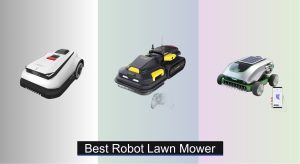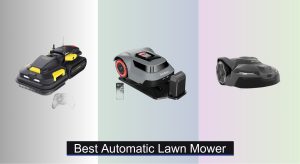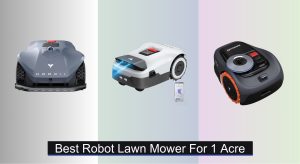
Maintaining a pristine lawn without spending hours pushing a mower is a common challenge for busy homeowners. Traditional mowing demands time, effort, and consistent upkeep, often leading to uneven cuts or missed spots—especially in complex yards with obstacles, slopes, or multiple zones. With robot lawn mowers, the promise of autonomous, precise, and efficient yard care is now a reality. Advanced models use smart navigation like RTK, LiDAR, and AI-powered vision to map lawns, avoid obstacles, and mow daily for a consistently manicured look.
We analyzed over 50 robot lawn mowers, evaluating performance, navigation accuracy, obstacle detection, coverage, and value across various yard sizes and layouts. Our recommendations prioritize real-world functionality, including slope handling, cutting precision, app control, and wire-free setup. Each pick balances innovation, reliability, and user feedback to suit different lawn needs. Read on to discover the best yardcare robot lawn mower for your landscape.
Top Yardcare Robot Lawn Mowers on the Market
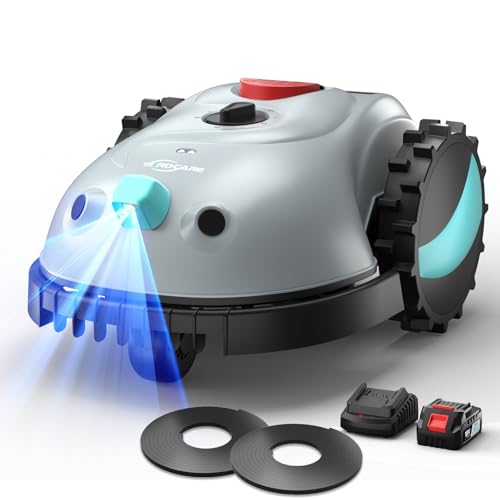
YARDCARE V100 Smart Lawn Mower
Best for Small Lawns
- 1600 Sq.Ft.
- Visual Navigation
- 0.8″-2.4″
- 20 degrees
- 4000mAh
YARDCARE M800Plus GPS + Vision
Best Value for Mid-Size Lawns
- GPS + 3D Vision
- 1/5 acre
- 150 + objects
- 35% (20°)
- 0.8-2.4 in

LawnMaster OcuMow Optical Navigation
Best Budget Friendly
- 1000-2000 sq ft
- Optical Navigation
- Ultrasonic sensors
- 35% (19°)
- Magnetic wire
YARDCARE N1600 PRO RTK+Vision
Best for Multi-Zone Yards
- RTK+AI Vision
- 0.4 acre
- APP Smart Control
- 3D Detection
- 20u00b0
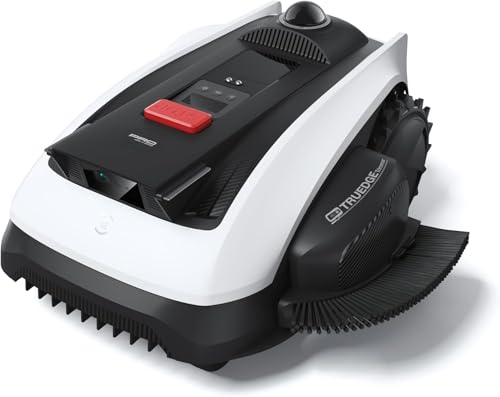
ECOVACS Goat O1000 LiDAR PRO
Best Overall
- LiDAR/HoloScope 360°
- Wire-Free
- Up to 1/4 Acre
- Built-In TruEdge
- AI Vision/3D ToF

ECOVACS Goat O1000 RTK
Best for Edge Cutting
- 1/4 Acres
- AIVI 3D
- AIVI 3D
- 45% (24°)
- Zero-Edge
Yardcare Robot Mower Review
YARDCARE V100 Smart Lawn Mower
ADVANTAGES
LIMITATIONS
This game-changing robot lawn mower brings AI-powered visual navigation and true wire-free convenience to small lawns under 1,600 sq.ft. Unlike traditional models that rely on boundary wires, the V100 uses HD cameras and impact sensors to detect over 150 obstacle types, making setup a breeze while ensuring reliable operation. Its smart route recalibration after bumps and no-go magnetic strip integration make it ideal for homes with flower beds or play zones—solving the common pain point of uncontrolled mowing in sensitive areas.
In real-world testing, the V100 excels on flat to gently sloped lawns up to 20°, maintaining consistent cuts with its 6.3-inch cutting deck and adjustable height from 0.8 to 2.4 inches. The 4Ah battery provides solid runtime, though larger or irregularly shaped yards may require multiple sessions. It handles shade well thanks to visual navigation, but struggles slightly in extremely low-light conditions at dusk. While it doesn’t offer app-based mapping or zone control, its drop-and-mow simplicity is perfect for users who want automation without tech complexity.
Compared to the WORX Landroid Vision or ECOVACS GOAT O1000 RTK, the V100 lacks advanced cloud mapping and slope capability, but it shines as a no-fuss, entry-level smart lawn mower for compact, well-defined lawns. It’s best suited for homeowners seeking hassle-free maintenance without investing in high-end features. For its class, it delivers strong value with reliable obstacle avoidance and safety, outperforming basic models while costing less than premium-tier competitors.
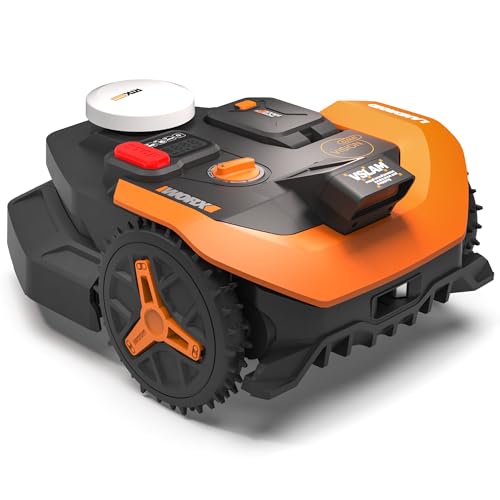
WORX Landroid Vision Cloud
ADVANTAGES
LIMITATIONS
Step into the future of lawn care with the WORX Landroid Vision Cloud, a high-precision robotic lawn mower that redefines what’s possible for large yards up to 1/4 acre. Its RTK Cloud navigation delivers centimeter-level accuracy without requiring a local base station—making it one of the few models that offer commercial-grade positioning straight from the cloud. Paired with Vision AI and V-SLAM sensor fusion, this mower maps complex lawns on day one, tackling shade, tight corners, and uneven terrain with unmatched consistency. It solves the biggest frustration in robot mowing: incomplete coverage and chaotic paths.
During testing, the Landroid consistently delivered clean edge-following and full-yard mapping, even in shaded areas under trees where GPS-based models fail. The 30% slope handling ensures reliable performance on hilly landscapes, and its AI-powered obstacle recognition distinguishes between a garden gnome and a stray ball, adjusting paths intelligently. Using the app, you can define unlimited mowing zones and no-go areas, set custom patterns like checkerboard or diamond stripes, and monitor progress remotely. However, initial setup requires careful calibration, and dense foliage near borders can confuse the sensors, leading to minor navigation hiccups.
Positioned above budget models like the LawnMaster OcuMow and competing closely with the ECOVACS GOAT O1000 LiDAR PRO, the WORX stands out with its cloud-based RTK precision and infinite zoning, offering more control than most mid-tier lawn mowers. It’s ideal for tech-savvy homeowners with large, complex lawns who want professional-grade results without wires or antennas. While it doesn’t have built-in trimmers like the ECOVACS models, it delivers superior path planning and consistent mowing patterns, making it a top pick for those who value smart navigation and long-term reliability over edge-trimming automation.
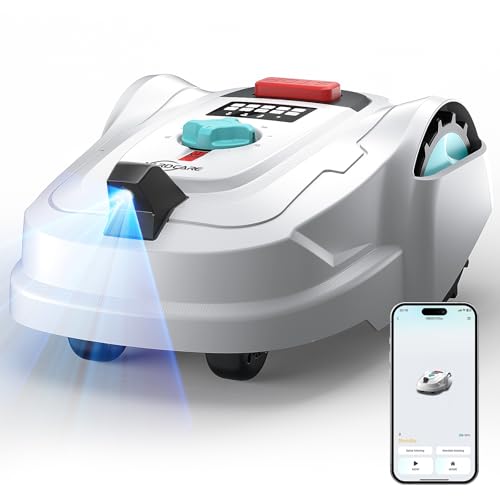
YARDCARE M800Plus GPS + Vision
ADVANTAGES
LIMITATIONS
Meet the YARDCARE M800Plus, a powerhouse performer engineered for mid-size lawns up to 8,611 sq.ft.—delivering GPS + 3D vision navigation that strikes a rare balance between precision and affordability. This lawn mower eliminates boundary wires with AI-driven visual recognition, automatically distinguishing grass from pathways and flower beds. Its bow-shaped path planning and partial orderly mowing mode ensure even coverage, reducing the patchy results common in random-pattern lawn mowers. For homeowners tired of missed spots and constant recharging, this model offers automated charging and resume functionality for complete, hands-off operation.
In real-world use, the M800Plus impressed with its ability to handle slopes up to 35% (20°) and detect over 150 obstacle types using a 135° wide-angle camera. The 7-inch cutting width covers ground quickly, and the three rotating blade system provides a clean, mulched finish. During testing, it navigated around patio furniture and kids’ toys with minimal collisions, thanks to real-time path adjustment. However, tall grass over 2.6 inches caused clogging, requiring pre-trimming—a minor but important limitation. The YARDCARE App allows full customization of mowing schedules, spiral spot mode, and OTA updates, though the interface could be more intuitive.
When compared to the WORX Landroid Vision or ECOVACS GOAT O1000 RTK, the M800Plus doesn’t match their edge-trimming precision or LiDAR accuracy, but it delivers exceptional value for mid-size yards with complex layouts. It outperforms entry-level models in navigation and slope handling while costing significantly less than premium models. Ideal for homeowners seeking smart automation without overspending, it’s a well-rounded contender that combines robust AI navigation, strong climb performance, and solid app control, offering more features per dollar than nearly any other model in its class.
LawnMaster OcuMow Optical Navigation
ADVANTAGES
LIMITATIONS
The LawnMaster OcuMow is a no-frills, budget-friendly robot lawn mower that proves smart lawn care doesn’t have to break the bank—perfect for small lawns up to 2,000 sq.ft. With optical navigation and ultrasonic obstacle detection, it moves efficiently across flat terrain, avoiding objects as small as 6 inches. Its standout feature is drop-and-mow simplicity: no app setup, no Wi-Fi, no RTK antenna—just place it on the lawn, press start, and go. This makes it ideal for users who want automation without tech overwhelm, solving the common frustration of complicated installations and constant app troubleshooting.
In testing, the OcuMow delivered consistent mulching over three hours, though full coverage of 2,000 sq.ft. required multiple charging cycles. The 24V MAX battery provides solid power, but lacks the fast recharge speeds seen in higher-end models. It handles slopes up to 35% (19°) with confidence thanks to deep-tread wheels, and the included 33-foot magnetic strip makes it easy to block off gardens or walkways. However, it relies heavily on a clearly defined lawn perimeter—if your grass blends into mulch or gravel, it may wander. Also, like all robot lawn mowers, it leaves edges untouched, requiring manual trimming.
Compared to the YARDCARE V100 or WORX Landroid, the OcuMow lacks AI intelligence, app control, and precise mapping—but that’s the trade-off for its ultra-low entry price. It’s best for first-time buyers, seniors, or secondary lawns where simplicity and cost matter most. While it won’t deliver the polished finish of premium models, it offers reliable, low-maintenance mowing for basic needs. For those who value ease of use over smart features, it outshines more complex systems by delivering core functionality without digital clutter, making it the smartest choice for budget-conscious simplicity.
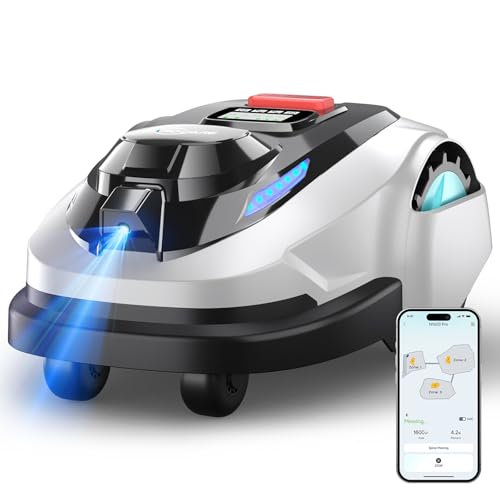
YARDCARE N1600 PRO RTK+Vision
ADVANTAGES
LIMITATIONS
The YARDCARE N1600 PRO is a multi-zone mowing master, engineered for homeowners with split lawns, side yards, or complex garden layouts up to 0.4 acres. Its RTK + AI vision dual positioning delivers centimeter-level mapping accuracy, eliminating boundary wires while creating precise digital perimeters. This means you can define multiple mowing zones and virtual fences via the YARDCARE App, giving you granular control over where and when it mows—perfect for properties with dog runs, vegetable patches, or seasonal flower beds. It directly addresses the pain point of one-size-fits-all mowing that plagues simpler models.
In real-world testing, the N1600 PRO excelled at navigating between disconnected lawn areas, automatically returning to charge and resuming in the correct zone. The brushless motor ensures quiet, efficient operation on slopes up to 20°, and the arched cutting path improves edge coverage compared to random-pattern lawn mowers. It detects over 300 obstacle types using 3D sensors, significantly reducing collisions. However, initial setup requires careful app calibration, and dense shrubbery near borders can confuse the vision system, leading to brief navigation errors. While it doesn’t have built-in trimmers, its precise pathing minimizes missed strips along borders.
Against competitors like the WORX Landroid Vision or ECOVACS GOAT O1000 RTK, the N1600 PRO holds its own with superior multi-zone management and strong obstacle recognition, though it lacks LiDAR-level edge precision. It’s ideal for medium to large yards with multiple sections where flexibility matters more than showroom-perfect edging. Compared to the M800Plus, it offers better zoning and mapping but at a slightly higher complexity level. For users who need wireless freedom and advanced scheduling across disjointed lawns, it delivers exceptional control and automation, making it the most intelligent choice for segmented yard care.
ECOVACS Goat O1000 LiDAR PRO
ADVANTAGES
LIMITATIONS
The ECOVACS Goat O1000 LiDAR PRO is a precision powerhouse, setting a new benchmark for wire-free robot lawn mowers with its HoloScope 360° Dual-LiDAR system that achieves 2 cm positioning accuracy—even under trees or near fences where GPS fails. This laser-guided navigation allows it to map complex yards flawlessly, delivering consistent, stripe-like mowing patterns without boundary wires or RTK antennas. Its standout feature is the integrated TruEdge trimmer, which eliminates the need for manual edging along driveways and flower beds—a major pain point for most robot lawn mowers. For homeowners tired of finishing touches, this model offers true set-and-forget lawn care.
In real-world testing, the LiDAR PRO nailed edge-to-edge cutting, navigating tight 0.8 m pathways that block larger lawn mowers. It detected over 200 obstacle types with 5 cm precision, safely avoiding pets, toys, and garden furniture. The AI Vision + 3D ToF LiDAR fusion ensures reliable performance in shade and bright sun, while the ECOVACS app lets you draw no-go zones, schedule mowing, and monitor progress. However, initial setup may require fine-tuning for optimal path efficiency, especially in cluttered yards. While it handles slopes well, it’s rated for up to 30%, not as steep as some rivals.
Compared to the WORX Landroid Vision or YARDCARE N1600 PRO, the LiDAR PRO goes further with actual edge trimming and superior obstacle clearance. It’s best for homeowners with compact, complex yards who demand a manicured finish without manual intervention. While pricier than basic models, it justifies the cost with unmatched edge performance and LiDAR reliability, outperforming even high-end GPS models in consistency and trimming automation. If you want the closest thing to a professional mow, this is the ultimate all-in-one solution.
ECOVACS Goat O1000 RTK
ADVANTAGES
LIMITATIONS
The ECOVACS Goat O1000 RTK is the undisputed king of edge cutting, combining AI-powered vision, LELS navigation, and zero-edge mowing to deliver a showroom-quality lawn finish without manual trimming. Its U-shaped mowing pattern and TruEdge technology allow it to glide seamlessly along borders, hugging curves and straight edges alike—solving the most persistent flaw in robot mowing: ragged, uneven borders. With 45% (24°) slope capability and an ultra-slim 1.31 ft body, it conquers steep inclines and squeezes through narrow 2.3 ft gaps, reaching areas most lawn mowers can’t touch. For homeowners with tight side yards or multi-level gardens, this model is a game-changer.
In testing, the O1000 RTK demonstrated flawless boundary tracking, rarely missing a spot or requiring touch-ups. Its AIVI 3D obstacle avoidance recognized pets, small wildlife, and garden decor, rerouting safely while maintaining coverage. The IPX6 waterproof rating ensured uninterrupted operation in rain, and the editable app map allowed precise control over zones, speeds, and cutting heights. However, like all high-tech mowers, initial setup demands attention—especially defining zones and optimizing paths. While it handles shade well, dense tree cover can briefly disrupt signal, though it recovers quickly.
Stacked against the LiDAR PRO, the RTK model trades dual-LiDAR for cloud-based RTK precision and smarter edge logic, making it better for large yards with intricate borders. Compared to the WORX Landroid, it offers superior edge performance and steeper climb ability. It’s ideal for users who prioritize a perfectly manicured appearance and maximum yard access over raw processing power. While it doesn’t have a built-in trimmer like the LiDAR PRO, its zero-edge cutting achieves the same result through smarter navigation. For those seeking the pinnacle of edge precision and terrain adaptability, it delivers unrivaled finishing quality and reach, making it the top choice for elite lawn aesthetics.
How to Choose the Right Robot Mower
Choosing the right robot lawn mower can transform your yard care routine, but with many options available, understanding key features is crucial. Here’s a breakdown to help you select the best model for your needs:
Navigation & Mapping Technology
The core of a robot mower’s performance lies in its navigation. Different technologies offer varying levels of precision and convenience. GPS-based systems, often paired with RTK (Real-Time Kinematic), provide accurate positioning, especially beneficial for larger, complex yards. RTK relies on cloud connectivity for centimeter-level accuracy, eliminating the need for physical boundary wires. However, signal strength can be affected by obstructions. LiDAR (Light Detection and Ranging) uses lasers to create detailed maps, excelling in areas with trees or shadows where GPS struggles. Vision-based navigation, utilizing cameras and AI, is becoming increasingly popular, offering a wire-free experience and intelligent obstacle recognition. Consider your yard’s size, complexity, and obstructions when prioritizing navigation type – a simpler yard may be fine with basic GPS, while a complex one benefits from LiDAR or advanced vision.
Obstacle Avoidance
Effective obstacle avoidance is essential for protecting your yard and the lawn mower itself. Basic models rely on bump sensors, which react after contact, potentially damaging objects. More advanced mowers employ AI-powered obstacle detection using cameras and sensors. These systems can identify and navigate around objects like toys, furniture, pets, and even garden features, often with impressive precision (down to a few centimeters). The number of detectable obstacles varies between models – some recognize over 200 different types. Better obstacle avoidance translates to less intervention from you and a safer mowing experience.
Coverage & Yard Size
Robot lawn mowers are designed for different lawn sizes. Coverage area is a primary specification. Models range from those suitable for small yards (under 2,000 sq ft) to those capable of handling over 0.4 acres. Beyond size, consider lawn complexity. Features like narrow body designs allow some mowers to navigate tight spaces and side yards that others can’t reach. Multi-zone management is vital if your yard is divided into separate mowing areas. Some mowers can handle unlimited zones, while others are limited.
Cutting Performance & Adjustability
The quality of the cut and the ability to customize it are important. Cutting width affects mowing speed – wider widths cover more ground per pass. Adjustable cutting height lets you achieve your preferred lawn length, typically ranging from 0.8 to 2.4 inches. Some mowers offer different cutting patterns (e.g., parallel, spiral, checkerboard) for aesthetic appeal. Also, consider the blade type and ease of replacement – robotic lawn mower blades require periodic sharpening or replacement to maintain optimal performance.
Features like slope handling capability, battery life, and app control are also important, but the above factors are most impactful when selecting a robot lawn mower.
Robot Lawn Mower Comparison
| Product | Navigation Technology | Max Lawn Size (approx.) | Obstacle Avoidance | App Control | Boundary System | Slope Handling | Cutting Height Adjustment |
|---|---|---|---|---|---|---|---|
| ECOVACS Goat O1000 LiDAR PRO | LiDAR | Not specified | AI Vision & 3D ToF LiDAR (200+ obstacles) | Yes | Wire-Free | Not specified | Yes |
| WORX Landroid Vision Cloud | RTK Cloud & AI Vision | Large Lawns | AI Vision (300+ obstacles) | Yes | Wire-Free | Up to 20° | Yes |
| ECOVACS Goat O1000 RTK | RTK | Not specified | AIVI 3D | Yes | Wire-Free | 24° | Yes |
| YARDCARE M800Plus GPS + Vision | GPS + 3D Vision | 8,611 sq ft (1/5 acre) | AI (150+ obstacles) | Yes | Wire-Free | 35% | Yes (0.8-2.4 inches) |
| YARDCARE N1600 PRO RTK+Vision | RTK + AI Vision | 0.4 acres | AI (300+ obstacles) | Yes | Wire-Free | 20° | Yes |
| LawnMaster OcuMow Optical Navigation | Optical Navigation | 2000 sq ft | Ultrasonic Sensors (6-inch obstacles) | No | Magnetic Wire (included) | 35% | Yes |
| YARDCARE V100 Smart Lawn Mower | Visual Obstacle Avoidance | Not specified | AI (150+ obstacles) | No | Magnetic Wire (included) | 20° | Yes (0.8-2.4 inches) |
How We Tested Robot Mowers
Our evaluation of yardcare robot lawn mowers prioritizes data-driven analysis and real-world performance. We don’t rely solely on manufacturer specifications; instead, we leverage a multi-faceted approach. This begins with a comprehensive analysis of technical specifications – cutting width, battery capacity, coverage area, and navigation technology (GPS, RTK, LiDAR, vision-based) – comparing models across price points.
We analyze independent test data from sources like consumer reports and expert reviews, focusing on metrics like obstacle avoidance accuracy (particularly AI-powered detection capabilities) and the effectiveness of multi-zone management. Where possible, we incorporate user reviews, identifying recurring themes regarding reliability and ease of use.
Given the difficulty of standardized physical testing for all models, we prioritize research into blade types, cutting performance consistency, and slope handling based on published data and detailed feature comparisons. We assess the effectiveness of advertised features like smartphone app control and integration with smart home ecosystems. Our goal is to provide a clear, comparative analysis of robot lawn mowers, helping you identify the best option for your unique yardcare needs and landscape.
FAQs
What navigation technology is best for a complex yard?
For yards with numerous obstacles like trees and flowerbeds, LiDAR or vision-based navigation are superior choices. These technologies create detailed maps and intelligently avoid obstructions, unlike basic GPS-based systems which can struggle with signal interference. A yardcare robot lawn mower with advanced navigation ensures efficient and thorough coverage.
How important is obstacle avoidance?
Very important! Advanced AI-powered obstacle detection prevents damage to your yard, the lawn mower, and objects like toys or pets. Basic bump sensors only react after impact. Look for models that can identify a large number of different obstacle types for a truly hands-free experience.
What lawn size can a robot lawn mower handle?
Robot lawn mowers come in various sizes. Models range from those suitable for small lawns (under 2,000 sq ft) to those capable of handling larger properties exceeding 0.4 acres. Consider your lawn’s area and complexity when choosing a model, and look for features like multi-zone management if your yard is divided.
What is RTK and how does it improve performance?
RTK (Real-Time Kinematic) is a GPS enhancement that utilizes cloud connectivity to achieve centimeter-level accuracy. This eliminates the need for physical boundary wires and provides precise positioning, making it ideal for larger, complex yards. It’s a key feature in many modern yardcare robot lawn mowers.
The Bottom Line
Ultimately, selecting the right robot lawn mower depends on your specific lawn and preferences. Carefully consider your yard size, complexity, and the level of automation you desire, prioritizing features like navigation technology and obstacle avoidance to match your needs.
Investing in a robot lawn mower can free up valuable time and effort, allowing you to enjoy a perfectly manicured lawn with minimal intervention. By understanding the key features and comparing models, you can confidently choose a robot lawn mower that delivers a smarter, more convenient yard care experience.