You’re clearing a heavy snowfall, the engine is running strong, and the augers are churning yet snow piles up uselessly in the housing. No discharge. No power. The culprit? Your snow blower impeller is not turning. This is a common but critical failure in dual-stage snow blowers, where the impeller’s job is to grab snow from the augers and blast it out through the chute at high speed. When it stops spinning, your machine becomes little more than a snow plow with no throw.
The good news: in most cases, this issue is diagnosable and fixable at home with basic tools and a systematic approach. The root cause typically lies in one of several key areas, including shear or roll pin failure, drive belt damage, gearbox problems, obstructions, or cable misadjustment. This guide walks you through every possible reason your impeller won’t turn, how to identify the exact problem, and step-by-step solutions for fast, reliable repairs.
Confirm Impeller vs. Auger Motion
Before diving into repairs, verify what is actually failing. Many users assume both systems are linked, but they can fail independently. This simple check narrows your focus and prevents wasted effort on the wrong components.
How to Test Each Component
Start by disconnecting the spark plug for safety. Then manually rotate the impeller from the discharge chute. If it spins easily, the impeller itself is not jammed. Next, reconnect the plug, start the engine, and engage the auger lever. Look behind the auger housing and observe whether the drive shaft spins.
If the drive shaft spins but the impeller does not, power reaches the shaft but the impeller is not connected. This indicates a broken roll pin or shear bolt. If neither the auger nor impeller turns, the problem lies upstream in the belt, gearbox, or auger shear pins.
What Each Test Result Means
When the impeller spins freely by hand but does not turn during operation, the connection between the impeller and its drive shaft has failed. This is the classic sign of a broken roll pin or shear bolt. If the impeller won’t spin manually, check for ice, debris, or a seized bearing.
Diagnose Shear and Roll Pin Failure
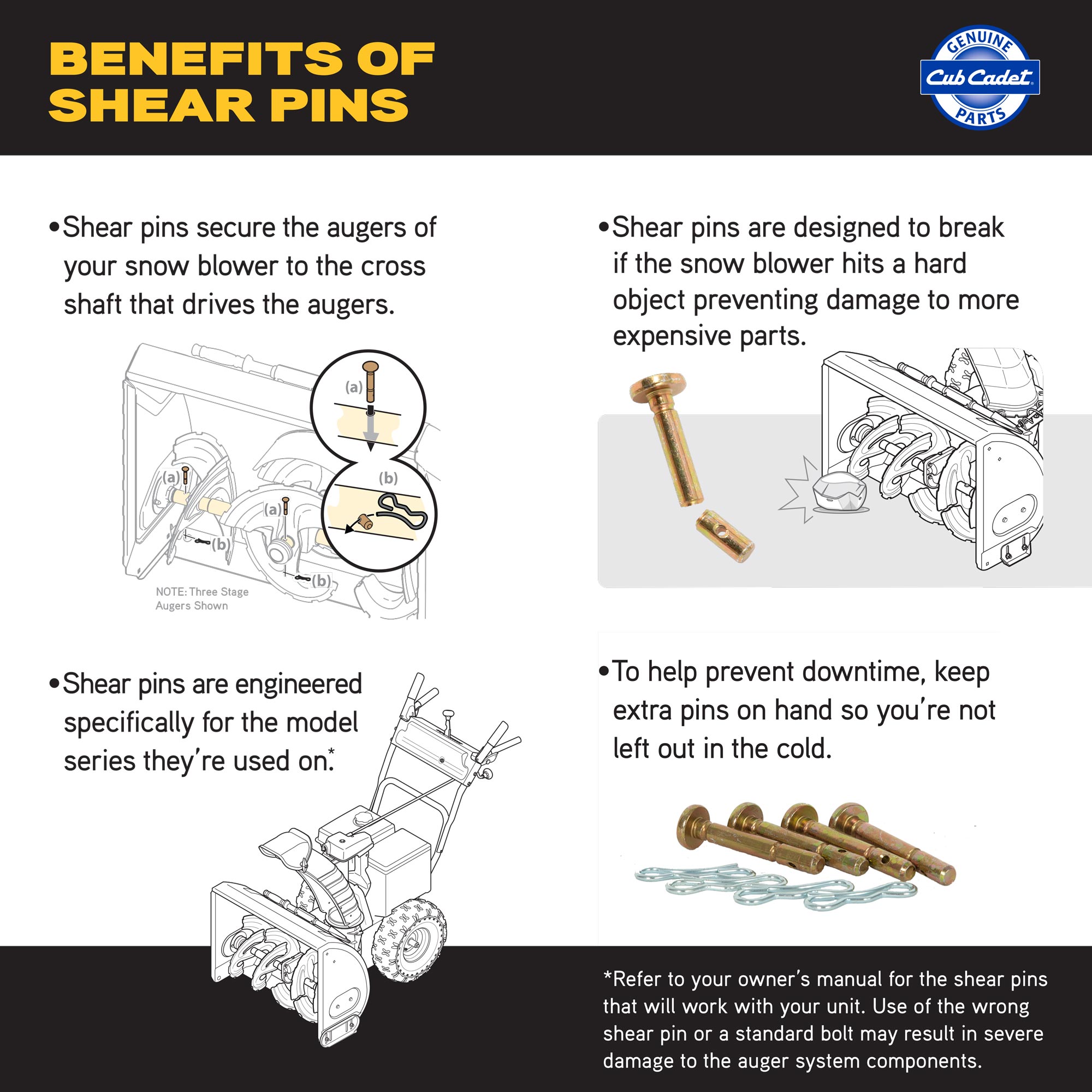
Shear and roll pins are sacrificial components designed to break when the impeller hits a rock or hard object. This protects your gearbox, shafts, and engine from catastrophic damage. However, when these pins break, the impeller stops turning even though the drive shaft is spinning.
Identifying Your Impeller Connection Type
Different brands use different connection systems. Ariens models use internal roll pins that are not visible without disassembly. Yamaha models use external shear bolts that are visible and accessible. John Deere 44-inch models use dual shear bolts, with one connecting to the gearbox and one to the drive shaft. Snapper and Craftsman models typically use roll pin configurations similar to Ariens.
Signs of Broken Roll Pins or Shear Bolts
The most obvious symptom is that the impeller spins freely by hand but does not turn when the engine is engaged. You may also notice the impeller feels loose or slides along the shaft. On models with external shear bolts, the bolt head may not rotate when you try to turn it with a wrench, indicating internal breakage.
Replace a Broken Roll Pin

Remove the auger and impeller assembly from the housing. Disassemble the impeller by removing retaining clips or bolts, then slide the impeller off the shaft. Use a 1/8-inch drift punch or drill bit to tap out remnants of the broken roll pin from both the hub and shaft. Align the new pin holes perfectly before inserting a new roll pin. Tap it in with a hammer until flush, being careful not to overdrive and damage the shaft. Reassemble and test.
Check Drive Belt Condition
The drive belt transmits power from the engine to the drive pulley, which turns both the auger and impeller. A broken, stretched, or dislodged belt halts all drive functions.
Belt Failure Symptoms
If neither the auger nor the impeller turns, the drive belt is a prime suspect. Look for belts that are cracked, frayed, glazed, or completely snapped. You might also hear a squealing noise under load or notice the belt slips when the auger is engaged.
Fix a Bad Drive Belt
Remove the belt cover and inspect the belt routing and condition. Check the idler pulley and tension spring for wear. Replace the belt with a model-specific part from your manual or a parts supplier. After installation, re-tension the belt and run the engine briefly without snow to ensure proper tracking.
Inspect Gearbox Output
Even with a good belt and intact shear pins, a stripped gearbox can kill impeller motion completely. The gearbox transfers engine power to the auger and impeller shafts through internal gears.
Gearbox Failure Signs
Engine runs and the belt spins, but there is no output from the gearbox. You might hear grinding noises or notice oil leakage. The internal gears, often brass, can crack or strip under overload.
Diagnose and Repair Gearbox Issues
Confirm that the input shaft from the engine is rotating, then check whether the output shafts to the auger and impeller are also rotating. If the input spins but outputs do not, the internal gears are likely stripped. Remove the four case bolts and extract the bearing using the original bolt as a drift to prevent shaft damage. Replace the damaged gear, matching the tooth count and part number. Clean the housing thoroughly with brake cleaner and compressed air, then reassemble with lithium white grease on the shaft and bearing.
Test Auger Engagement Cable
Some models rely on a cable to engage the impeller clutch. When this cable becomes loose or misadjusted, the impeller may not engage properly.
Cable Failure Symptoms
The impeller works only when the rear of the machine is lifted. The engagement lever feels loose or lacks resistance. Operation may be intermittent, working sometimes and not others.
Adjust the Engagement Cable
Locate the cable anchor near the handlebar. Loosen the locknut and pull the cable taut. Re-tighten the locknut and test the engagement. It should feel firm and immediate. One Briggs and Stratton owner resolved intermittent impeller spin by tightening the auger engagement cable with no parts needed.
Clear Impeller Housing Obstructions
Even a small ice chunk can freeze the impeller in place. Wet snow or improper storage leads to ice buildup that prevents rotation.
Remove Ice and Debris
Shut off the engine and disconnect the spark plug. Use a plastic shovel or stick to clear the chute and housing. Pour warm, not hot, water to melt stubborn ice. Wipe dry and apply dry lubricant or silicone spray to reduce future buildup. After each use, run the machine for 30 seconds without snow to dry out the housing.
Prevent Future Failures
Most impeller failures are preventable with seasonal care. A few simple maintenance steps can save you from cold-weather repairs.
Pre-Season Checklist
Inspect shear and roll pins for signs of wear or damage. Check belt tension and condition. Test cable engagement and adjust if needed. Lubricate bearings and shafts with lithium white grease. Verify gearbox oil level using SAE 80W-90 and fill to the bottom of the fill hole.
After-Use Routine
Clear all snow and ice from the housing. Wipe down the chute and impeller. Store the machine in a dry, covered area. Keep a spare roll pin kit and drive belt on hand for quick emergency repairs.
When to Replace vs. Repair
Some issues are worth repairing, while others may require replacement. Here’s a quick reference.
| Issue | Repairable | Average Time | Cost (OEM) |
|---|---|---|---|
| Broken roll pin | Yes | 10-20 minutes | $5-$15 |
| Loose cable | Yes | 5 minutes | $0 |
| Stripped gearbox gear | Yes | 2-4 hours | $25-$60 |
| Full gearbox assembly | Yes | 1-2 hours | $150-$300 |
| Seized bearing | Yes | 1-3 hours | $15-$30 each |
| Worn auger/impeller assembly | Replace | 1 hour | $100-$250 |
Final Verification Checklist
Before heading back out into the storm, run through this checklist. Reconnect the spark plug. Ensure shear bolts and pins are OEM-spec and torqued to 25-35 in-lbs. Verify belt tension and alignment. Check that cables are adjusted for full engagement. Confirm the gearbox is sealed and lubricated. Test that the impeller rotates freely by hand. Listen for grinding or binding during a test run. Verify snow discharges cleanly under load.
Frequently Asked Questions About Snow Blower Impeller Not Turning
Why does my snow blower collect snow but not throw it?
This happens when the augers work but the impeller does not. The augers gather snow and feed it to the impeller, which then throws it through the chute. If the impeller is not turning, the snow has nowhere to go and piles up in the housing.
How do I know if the shear pin or roll pin is broken?
Spin the impeller by hand. If it turns freely but does not turn when the engine is running, the connection between the impeller and shaft has failed. On models with external shear bolts, you may see a broken bolt. On models with internal roll pins like Ariens, disassembly is required to confirm.
Can I use a regular bolt instead of a shear pin?
Never substitute hardened steel bolts for OEM shear pins. These pins are designed to break under excessive load to protect your gearbox and engine. Using a regular bolt voids your warranty and risks expensive damage.
What causes the impeller to freeze in place?
Ice buildup from wet snow or improper storage can freeze the impeller. Foreign objects like rocks or sticks can also jam the impeller. Clear any debris and allow the machine to warm up if heavily iced.
How much does it cost to repair a non-turning impeller?
Most repairs cost between $5 and $60. Broken roll pins cost $5-$15 for parts. Drive belts run $20-$40. Gearbox repairs can cost $25-$60 for gears or $150-$300 for a full assembly.
Key Takeaways for Fixing Your Snow Blower Impeller
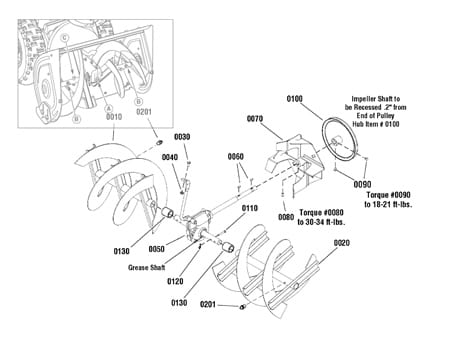
A non-turning impeller does not mean your snow blower is dead. Most issues come down to a simple mechanical disconnect that you can fix yourself. Start with the easiest checks, including ice and debris clearance, cable tension, and belt condition. If the impeller spins freely by hand but does not turn during operation, you are almost certainly dealing with a broken roll pin or shear bolt. Keep OEM-spec spare parts on hand, perform seasonal maintenance, and your dual-stage snow blower will keep throwing snow all winter long.