
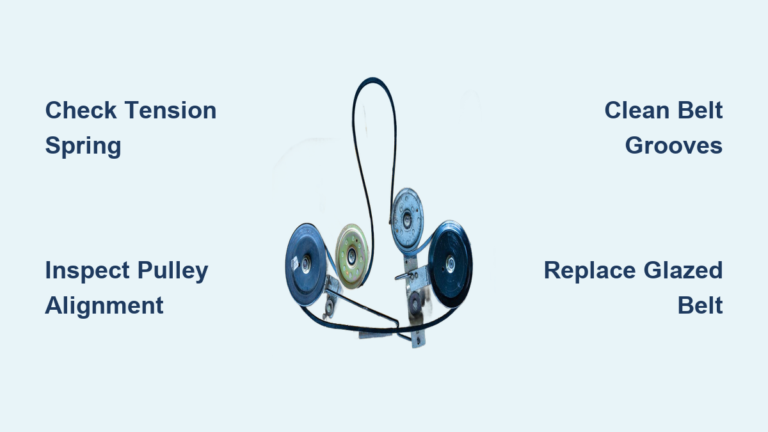
That high-pitched squeal as you hit thick grass isn’t just annoying—it’s your lawn mower belt slipping under pressure. When rubber burns and blades slow mid-mow, you’re not just wasting time; you’re risking costly damage to pulleys, bearings, and spindle assemblies. Over 60% of belt failures stem from preventable issues like worn tensioners or misaligned pulleys, not the belt itself. This guide delivers a precise, step-by-step fix for lawn mower belt slipping—no mechanic needed. You’ll learn to diagnose the exact culprit in 15 minutes, install the correct replacement, and implement proven prevention strategies that double belt life.
Spotting Lawn Mower Belt Slipping Before It Ruins Your Deck
Don’t wait for total failure. These specific signs confirm lawn mower belt slipping:
– Squealing during high-load mowing: A sharp, escalating whine when tackling wet grass or slopes indicates loss of grip.
– Burning rubber odor with visible smoke: Friction heat scorches the belt, leaving black streaks on pulleys.
– Blades slowing unexpectedly: The deck loses power when grass height exceeds 3 inches, even with sharp blades.
– Uneven grass clippings: Patchy mowing results from inconsistent blade speed due to intermittent slipping.
– Frayed belt edges: Worn sidewalls “bottom out” in pulley grooves, losing traction.
Critical red flag: If the belt throws off pulleys after replacement, misrouting or pulley misalignment is almost always the hidden cause—not the new belt.
Critical Safety Protocol Before Touching Your Mower
Skipping these steps risks severe injury. Perform exactly in this order:
1. Disconnect the spark plug wire and secure it 6+ inches from the plug. Never assume the ignition switch is safe.
2. Wait 30 minutes for engine and deck components to cool completely—metal surfaces exceed 300°F during operation.
3. Block the blades with a 2×4 wooden wedge against the deck housing to prevent accidental rotation.
4. Engage parking brakes on riding mowers and chock rear wheels on inclines.
Pro Tip: Wear cut-resistant gloves when handling blades—residual grass moisture creates slippery surfaces even on “dry” decks.
Pinpointing Your Lawn Mower Belt Slipping Culprit

Lawn mower belt slipping is a symptom, not the root problem. Target these verified causes:
Why Weak Tension Causes Immediate Belt Failure
A stretched tensioner spring (common after 50+ hours) can’t maintain grip under load. Test tension by pressing the belt mid-span: if it deflects more than ½ inch, the spring is fatigued. On hydrostatic riders, a seized idler pivot arm creates the same effect—inspect for rust or bent mounting brackets. Never compensate with an oversized belt; this overloads spindle bearings.
Glazed Belts vs. Normal Wear: What’s Actually Failing
A “glazed” belt has a glassy, mirror-like surface from chronic slipping—replacing it without fixing the root cause guarantees repeat failure. Compare your belt to a new one: if the old belt measures 1+ inch longer when stretched, elongation is the issue. Cracks on the inner curve or frayed edges mean replacement is urgent, but won’t solve slipping if pulleys are misaligned.
Pulley and Bearing Failures You Can Detect in 60 Seconds

Grasp each blade spindle and rock it side-to-side. Any movement beyond 1/16 inch indicates worn bearings—a major cause of belt derailment. Spin idler pulleys: grinding noises or resistance mean seized bearings. Check pulley grooves with a flashlight; deep cuts or “shiny” spots where rubber contacts metal will shred new belts.
Contamination That Mimics Belt Wear
Engine oil leaks or hydraulic fluid on pulleys reduce friction instantly. Wipe all surfaces with degreaser—if residue transfers to a white rag, contamination is your primary issue. Grass buildup acts like a wedge: packed debris under the belt forces it out of pulley grooves during operation.
Misalignment That Throws Belts Off Track
Misaligned pulleys cause belts to “walk” sideways until they jump off. Place a metal ruler across adjacent pulleys; if gaps exceed 1/8 inch, deck brackets are bent. Even minor frame impacts from curbs or rocks misalign pulleys.
Fix Lawn Mower Belt Slipping: Precision Repair Sequence
Step 1: Diagnose Before Disassembly (5-Minute Inspection)
- Map the belt path with your phone camera—routing errors cause 70% of “new belt” failures.
- Spin all pulleys by hand: sticky idlers or wobbly spindles need replacement before new belt installation.
- Measure tension spring length against specs in your manual; if stretched 10% beyond new length, replace it.
Critical Mistake to Avoid: Never pry belts off pulleys with screwdrivers—this damages flanges and guarantees slippage.
Step 2: Belt Removal and Replacement Protocol
- Release tension by pulling the idler arm toward the deck center (use pliers on stubborn springs).
- Slide the old belt off stationary pulleys first, working toward the tensioner.
- Verify OEM part number—stamped on the belt’s edge or in your manual. Cross-reference online with “[Your Model] deck belt.”
Time-Saver: Soak a new belt in warm water for 2 minutes—it expands slightly for easier installation without stretching.
Step 3: Pulley and Tensioner System Check

– Replace glazed pulleys if grooves feel smooth or show metal contact marks.
– Install a new tensioner spring if the old one sags when hung vertically (even if it “seems” strong).
– Clean pulley grooves with a wire brush—caked grass creates false alignment.
Step 4: Correct Belt Installation Sequence
- Route the belt around the engine pulley and all fixed idlers per your photo.
- Engage the tensioner last: Pull the idler arm fully toward the deck, slip the belt over its pulley, then release slowly.
- Test rotation: Manually spin blades (spark plug disconnected!)—the belt should track straight in all grooves with no jumping.
Final Validation: Start the mower at idle. Engage blades and slowly increase RPM. Zero squealing at full throttle confirms success. Shut off immediately if you hear grinding—recheck pulley alignment.
Pro Maintenance Tactics to Prevent Belt Slipping Forever
Spindle Bearing Longevity Hack
After every 25 mowing hours, inject 3-5 drops of marine-grade grease into spindle zerks. Over-greasing blows seals, but under-greasing causes drag-induced slippage.
Deck Cleaning That Actually Works
Scrape grass buildup with a putty knife before washing. Hose off residue only when the deck is warm (not hot)—cold water on hot metal warps alignment. Dry completely with compressed air to prevent rust.
Storage Protocol for Off-Seasons
Remove belts before winter storage. Ozone and temperature swings degrade rubber even when idle. Store in a sealed container with silica gel packs—never in garages near lawnmower fuel cans.
When to Suspect Deck Damage
If belts slip consistently after two replacements, inspect deck shell integrity. Dents near pulley mounts (from rocks or curbs) misalign pulleys. Tap dents outward gently with a rubber mallet—never hammer directly on metal.
Stop Lawn Mower Belt Slipping Before It Starts
A slipping belt is your mower’s distress signal—not a throwaway part. By addressing tensioner springs, pulley alignment, and contamination within 15 minutes, you’ll avoid $200+ service calls and extend deck life by years. Remember: 90% of belt failures trace back to overlooked tensioner wear or misrouting. Implement the seasonal checks in this guide—especially post-mow deck cleaning and tension spring inspections—and you’ll never face mid-lawn belt failure again. For persistent issues, consult your model’s service manual for pulley alignment specs; a 1/16-inch adjustment often solves chronic slipping. Keep this guide handy for your next maintenance session, and share it with fellow mower owners drowning in grass clippings and frustration.


