

That frustrating thud when your zero turn mower hits an invisible rock isn’t just annoying—it’s a warning sign. Neglected zero turn mower maintenance turns minor issues into expensive repairs that sideline your machine during peak mowing season. A single season of improper care can slash your mower’s lifespan by 40%, leaving you stranded with an overgrown lawn and a repair bill that costs half your machine’s value. This guide cuts through the guesswork with manufacturer-approved procedures that keep your mower running smoothly from the first cut of spring to the last pass of fall. You’ll discover exactly when to change fluids, how to prevent hydrostatic failures, and why skipping post-mow cleaning guarantees rusted decks and shredded belts.
Stop Ignoring These 3 Pre-Mow Checks That Prevent Catastrophic Failures
Skipping pre-mow inspections is the #1 cause of preventable zero turn mower breakdowns. These 90-second checks catch 90% of critical issues before they strand you mid-lawn.
Check Hydraulic Fluid Levels Before Every Use (Not Just Oil)
Unlike standard mowers, zero turns rely on pressurized hydraulic systems where low fluid causes instant transmission damage. Locate your hydrostatic reservoir (typically near the drive pumps) and verify fluid reaches the “full” mark on the dipstick. If levels are low, inspect for leaks around pump seals and hose connections—never top off without finding the leak source. Critical warning: Operating with low hydraulic fluid creates air pockets that overheat pumps, leading to $500+ repairs within minutes.
Verify Tire Pressure for Scalping Prevention
Uneven tire pressure distorts your cutting deck geometry, causing scalping on turns. Check all four tires with a quality gauge (not just visual inspection) and inflate to the exact PSI stamped on the tire sidewall—typically 10-12 PSI for rear drive tires and 8-10 PSI for front casters. Underinflated front casters increase steering resistance by 30%, accelerating wear on hydraulic motors.
Inspect Deck Belts for Glazing Before Mowing
Run your fingers along the inner surface of deck belts while the engine is off. Look for shiny, glassy patches indicating belt slippage—a precursor to snapping during operation. Replace any belt showing glazing immediately; a broken belt mid-cut can jam the pulley system, requiring spindle replacement.
Zero Turn Mower Maintenance Schedule: Exact Hour Intervals for Every Critical Task
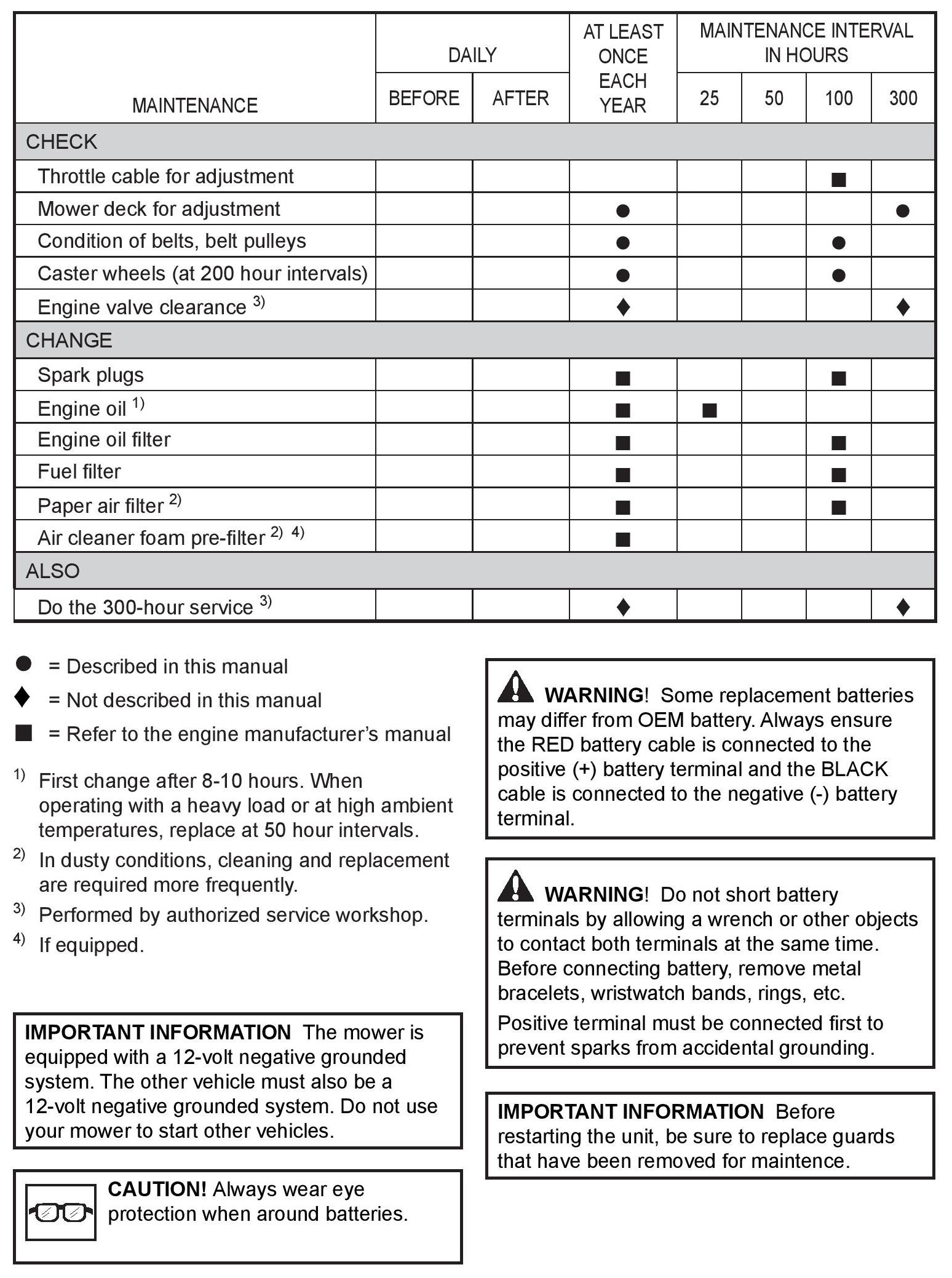
Follow this hour-based schedule to the minute—deviating by just 10 hours risks component failure. Track usage with a digital hour meter ($20 at any auto parts store).
Every 10 Hours: Prevent Electrical Failures With This 5-Minute Ritual
Commercial landscapers report dead batteries as their top spring headache—all preventable with this routine:
– Clean battery terminals with a wire brush dipped in baking soda solution
– Apply dielectric grease to prevent corrosion
– Grease front axle zerks and caster joints with water-resistant lithium grease
Pro tip: Skip the dealership—use marine-grade grease (NLGI #2) that repels water better than standard chassis grease.
Every 25 Hours: The Engine Cooling Check Mechanics Overlook
Clogged cooling fins cause 68% of summer engine seizures. After shutting off the engine:
1. Remove the engine shroud per your manual
2. Blast cooling fins with compressed air (never a leaf blower—debris gets packed deeper)
3. Clean the air filter pre-cleaner sleeve with soapy water; replace paper elements if dirty
Critical: Never clean paper filters with compressed air—it creates micro-tears that allow dust into cylinders.
Every 50 Hours: The Oil Change That Saves Your Engine
Changing oil every 50 hours—not just annually—prevents sludge buildup in tight clearances. Use only API SJ/SL-rated oil (typically 15W-50 synthetic). Drain oil while engine is warm, replace filter, then run for 2 minutes before rechecking level. Mistake to avoid: Overfilling by 1/4 quart can blow seals on hydrostatic transmissions.
Blade Sharpening Secrets That Prevent Deck Destruction in 20 Minutes
Dull blades don’t just tear grass—they transfer destructive vibration to spindles. Follow this shop-tested sharpening protocol.
Why You Must Balance Blades After Every Sharpening
An unbalanced blade creates centrifugal force that wears spindle bearings 5x faster. After sharpening:
1. Hang the blade on a nail—uneven weighting shows imbalance
2. File metal from the heavier side until it hangs level
3. Test-spin the blade on its mount; excessive wobble means discard it
Warning: Never strike blades with hammers to remove them—this cracks the hub. Use an impact wrench with a 1/2″ drive.
The Rust-Proofing Trick for Off-Season Deck Storage
After final cleaning, spray the deck underside with non-stick cooking spray (not WD-40—it attracts dirt). The food-grade oil creates a moisture barrier without gumming up. For long-term storage, apply marine-grade paste wax to painted surfaces—this outperforms petroleum-based protectants by 3x in humidity tests.
Prevent Hydrostatic Transmission Failure With These 3 Checks

Hydrostatic pump failures account for 45% of $1,000+ zero turn repairs. Avoid them with these specific procedures.
Check Hydraulic Fluid Color Monthly
Pull the dipstick and rub fluid between fingers. Clean fluid feels smooth and appears amber. If it’s:
– Milky = Water contamination (replace immediately)
– Black with grit = Internal wear (requires professional service)
– Thick like syrup = Overheating damage (flush entire system)
Time-saver: Keep a fluid sample chart taped inside your maintenance log for quick comparison.
Never Ignore These Overheating Warning Signs
Hydrostatic systems fail catastrophically when temps exceed 220°F. Watch for:
– Sudden loss of drive power on hills
– Burning smell from rear pumps
– Visible smoke from cooling fins
Shut down immediately if observed—continuing operation for just 5 minutes can weld pump components.
End-of-Season Storage: 4 Steps That Prevent Spring Starting Nightmares
Improper storage causes 80% of April breakdowns. Do this before storing for winter.
Treat Fuel Correctly—The #1 Storage Mistake
Add fuel stabilizer (like STA-BIL 360) to the gas can before filling your tank—never pour it into existing fuel. Run the engine 5 minutes to circulate treated fuel, then drain the carburetor bowl via its drain screw. Critical: Ethanol-free fuel is non-negotiable; ethanol separates water that corrodes fuel systems.
Battery Storage Protocol That Doubles Lifespan
Remove the battery and store it on a wood shelf (not concrete). Connect a smart maintainer set to “storage mode”—this prevents sulfation while using minimal power. Check voltage monthly; below 12.4V indicates needing a refresh charge.
Zero Turn Mower Slope Safety: Avoid Rollovers on Inclines Over 15 Degrees
Slope accidents cause 30% of zero turn injuries. These protocols save lives.
The 10-Degree Rule for Safe Mowing
Never mow slopes exceeding 10-15 degrees—check your manual for exact limits. On acceptable inclines:
– Always mow straight up and down (never side-to-side)
– Keep blades disengaged when turning on slopes
– Reduce speed by 50% on wet grass
Pro tip: Place colored flags at slope edges—this visual cue prevents drifting near drop-offs.
Emergency Protocol for Sudden Loss of Control
If wheels lift during a turn:
1. Immediately disengage blades
2. Release control levers to neutral position
3. Apply parking brake gradually
4. Evacuate downhill—never jump toward the mower’s roll path
Consistent zero turn mower maintenance isn’t just about preventing breakdowns—it’s your license to mow with confidence. By following this exact schedule, you’ll extend your machine’s life by 5+ seasons while avoiding the $300+ emergency repairs that plague 60% of owners who skip routine care. The real payoff? That smooth, silent glide across your lawn as sharp blades create perfect stripes without a single scalped patch. Start tracking your next service interval today—your future self (and your lawn) will thank you when competitors’ mowers sit idle with burned-out transmissions. Remember: the most expensive maintenance is the repair you didn’t prevent.