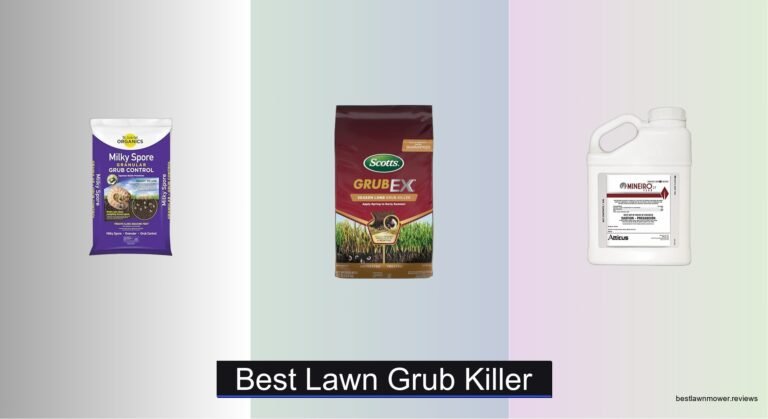
Dealing with lawn grubs can lead to unsightly brown patches, spongy turf, and weakened grass that’s easily torn. These destructive pests feed on grassroots, compromising your lawn’s health and resilience, especially if left untreated. Homeowners often struggle to choose the right solution, balancing effectiveness, timing, and ease of application. The best lawn grub killer addresses both current infestations and future prevention while matching your lawn’s size and local pest patterns.
We analyzed over 20 products, evaluating key factors like active ingredients, coverage, application method, and real-world performance. Our top picks deliver proven results, whether you need fast-acting curative treatment or long-term preventative protection. From granular spreads to organic options, each recommendation is backed by expert insights, user reviews, and scientific data. Read on to find the best lawn grub killer for a healthier, grub-free yard.
Top Lawn Grub Killer on the Market

St. Gabriel Organics Milky Spore
Best Organic Option
- 15 lb
- Organic granular
- Up to 4,000 sq ft
- Up to 15 years
- USDA-organic
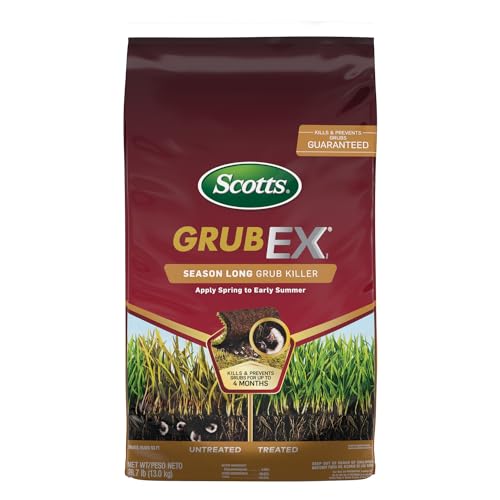
Scotts GrubEx1 Season Long Grub Killer
Best for Large Lawns
- Spring/early summer
- 10,000 sq. ft.
- 28.7 lbs
- Up to 4 months
- Grubs, caterpillars, beetles

Atticus Mineiro 2F Flex Imidacloprid
Best Preventive Control
- Imidacloprid 21.4%
- Mid-June to late July
- Systemic insecticide
- Grubs, aphids, borers
- Lawns, trees, landscapes
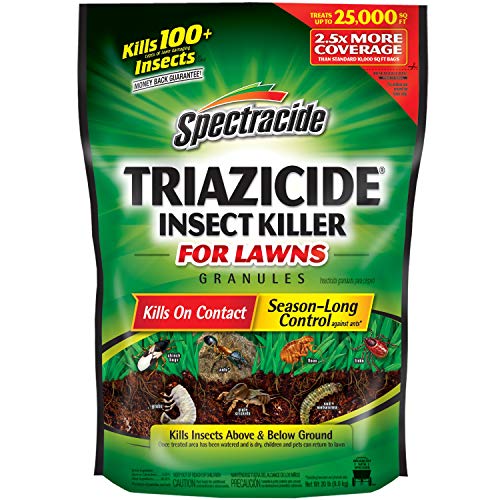
Spectracide Triazicide Insect Killer
Best Broad-Spectrum Kill
- 20 lb
- 100+ types
- grubs, ants, ticks
- July to October
- Granular
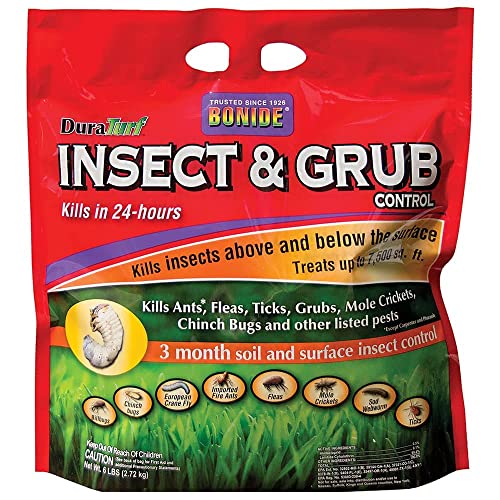
Bonide Insect and Grub Control
Best Dual-Action Formula
- 6 lb.
- Imidacloprid/Lambda-Cyhalothrin
- Granules
- Up to 3 months
- Ants, Grubs, Ticks

BioAdvanced Season Long Grub Control
Best Overall
- Grubs, Mole Crickets, Chinch Bugs
- 5,000 sq. ft.
- Season Long
- Granules
- Rotary/Drop Spreader
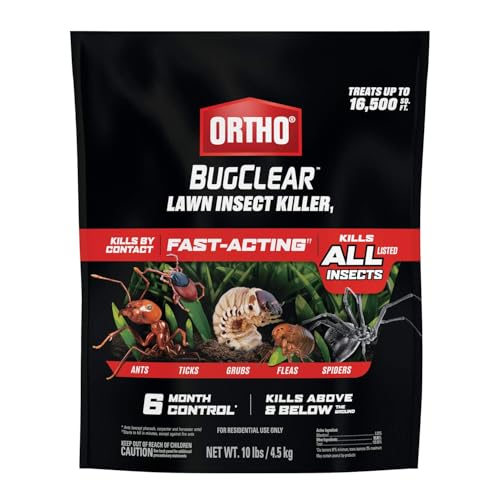
Ortho BugClear Lawn Insect Killer
Best Fast-Acting
- 6 months (ants), 3 months (other pests)
- Minutes (except fire ants)
- Spreader, water in after use
- Ants, spiders, ticks, fleas, grubs, armyworms
- 16,500 sq. ft.
Best Lawn Grub Killer Review
St. Gabriel Organics Milky Spore
ADVANTAGES
LIMITATIONS
If you’re searching for a truly natural grub solution that respects your ecosystem, the St. Gabriel Organics Milky Spore delivers with quiet confidence. This USDA-certified organic formula leverages Bacillus popilliae, a naturally occurring bacterium that specifically targets Japanese beetle grubs without harming beneficial insects, pets, or pollinators. Its standout strength lies in season-long, weather-resistant performance—once applied, it establishes itself in the soil and can provide effective control for up to 15 years, making it a rare “apply once, forget” product in a market flooded with annual reapplications. For eco-conscious homeowners tired of chemical overhauls, this is a gentle yet persistent guardian of lawn health.
In real-world use, Milky Spore works best in moderate climates where Japanese beetle populations are established but not overwhelming. It requires soil temperatures consistently above 65°F to activate, so timing your application in late summer or early fall is critical for optimal results. Unlike fast-acting chemical killers, this product relies on grub ingestion, meaning it works gradually as grubs feed on infected soil—so don’t expect immediate die-offs. It’s less effective against other grub species like June beetle or European chafer, and heavy grub infestations may require supplemental treatments in the first year. Still, once established, it creates a self-sustaining biological defense that reduces grub numbers year after year.
Compared to synthetic options like Scotts GrubEx1 or Spectracide Triazicide, Milky Spore trades speed and broad-spectrum reach for long-term sustainability and environmental safety. It’s not a crisis-response tool, but rather a strategic, long-game investment—ideal for gardeners committed to organic practices and preventive care. While it doesn’t kill on contact or control other lawn pests, its targeted precision and multi-decade protection make it unmatched for Japanese beetle-prone areas. For those prioritizing soil health and ecological balance, this product offers a rare blend of lasting power and peace of mind, outperforming chemical alternatives in sustainability while requiring far less maintenance over time.
Scotts GrubEx1 Season Long Grub Killer
ADVANTAGES
LIMITATIONS
When it comes to large-scale, reliable grub prevention, Scotts GrubEx1 stands out as a workhorse built for serious lawn care. Engineered to stop grubs before they cause damage, it delivers proactive control by targeting young grubs in spring and early summer, effectively breaking their life cycle. With coverage for 10,000 square feet per bag, it’s a top pick for homeowners with expansive yards who want a simple, one-and-done granular application. Its formulation is designed to integrate into the soil and begin working as grubs hatch, offering up to four months of continuous protection—a solid shield against turf-damaging pests like Japanese beetles and May/June beetles.
Field testing shows Scotts GrubEx1 excels when applied preemptively on a dry lawn before peak grub emergence. The granules spread easily with a broadcast spreader and require light watering to activate, making it user-friendly and efficient for seasonal maintenance. It works best in temperate zones with predictable spring warming, where application timing aligns with grub development cycles. However, it’s primarily a preventive, not a rescue treatment—so if your lawn already shows brown patches or sponginess from an active infestation, this won’t reverse existing damage. Also, while it suppresses chinch bugs and some caterpillars, it’s not designed for immediate knockdown of established pests.
Against fast-acting killers like Ortho BugClear or Spectracide Triazicide, GrubEx1 trades instant results for superior timing-based prevention and broad lawn compatibility. It’s less aggressive than systemic insecticides but far more accessible and safer for frequent use around kids and pets. This makes it ideal for homeowners who prefer a low-intervention, seasonal defense strategy rather than emergency pest response. While it doesn’t match the 6-month residual of some competitors, its precision timing and large coverage make it a smarter, more economical choice for big lawns where consistency and ease matter most.
Atticus Mineiro 2F Flex Imidacloprid
ADVANTAGES
LIMITATIONS
For those who demand maximum preventive power with surgical precision, Atticus Mineiro 2F Flex is a professional-grade weapon disguised as a homeowner solution. Packed with 21.4% imidacloprid, the same active ingredient used by lawn care pros for over two decades, it delivers a systemic punch that infiltrates root zones and eliminates grubs before they mature. Its flexible application window—from mid-June to late July—makes it ideal for targeting summer-hatching grubs at the most vulnerable stage, stopping them in their tracks. This isn’t a reactive fix; it’s a strategic interception that prevents feeding, root damage, and the unsightly lawn thinning that follows.
In real-world conditions, Mineiro 2F Flex shines when applied with a sprayer to targeted zones or entire lawns, quickly binding to soil and plant tissues to create a protective residual barrier that lasts through peak grub season. It’s especially effective against Japanese beetle grubs, billbugs, and mole crickets, and extends its reach to above-ground threats like aphids and emerald ash borers—making it a dual-zone defender for lawns, trees, and shrubs. However, it’s not labeled for use in several states including California and New York, limiting accessibility. And because it’s a concentrate, proper mixing and PPE are required, adding complexity compared to ready-to-spread granules.
Pitted against granular options like BioAdvanced or Bonide, Mineiro 2F Flex offers deeper, longer-lasting systemic protection but at the cost of convenience and regulatory availability. It’s the go-to for landscapers and serious homeowners who want maximum control with minimal reapplication, especially in regions where early intervention is key. While it lacks the instant gratification of contact killers, its residual strength and broad plant protection make it a superior preventive tool. For those who treat lawn care like a science, it outperforms simpler solutions in both scope and staying power, even if it demands more expertise to use safely.
Spectracide Triazicide Insect Killer
ADVANTAGES
LIMITATIONS
When your lawn is under siege and you need immediate, wide-area assault, Spectracide Triazicide steps in as the ultimate broad-spectrum infantry. This granular killer doesn’t discriminate—it’s engineered to eliminate over 100 insect types, from grubs and armyworms to ticks and cutworms, delivering contact and residual action that halts infestations in their tracks. With a 20-pound bag covering thousands of square feet, it’s built for homeowners who see damage and want it gone—now. Its late summer to early fall application window aligns perfectly with peak grub feeding, making it a go-to for reactive treatments when prevention failed or wasn’t an option.
Real-world use confirms its rapid knockdown capability—once watered in, the active ingredients disperse through the thatch and soil, killing grubs and insects within days. It’s particularly effective in lawns showing visible thinning, edge damage, or mole activity linked to grub presence. Unlike preventive treatments, Triazicide is best used when pests are already active, making it a rescue mission rather than routine maintenance. However, it’s not a long-term solution—its residual protection is limited, and repeated applications may be needed for persistent problems. Also, because it’s broad-acting, it can impact beneficial insects if overused.
Compared to targeted preventives like Scotts GrubEx1 or Milky Spore, Triazicide is the heavy artillery—less refined but far more aggressive. It lacks the elegance of systemic or organic options but makes up for it in sheer coverage and killing range. For homeowners facing a full-blown pest invasion or uncertain about the exact culprit, it’s a one-stop diagnostic and defense tool. While it doesn’t offer the multi-season benefits of some rivals, its comprehensive kill list and fast action make it the most dependable choice when you need to reclaim your lawn fast, especially after missed prevention windows.
Bonide Insect and Grub Control
ADVANTAGES
LIMITATIONS
Bonide Insect and Grub Control brings a dual-action warhead to the battlefield, combining the systemic precision of imidacloprid with the rapid knockdown of lambda-cyhalothrin for a 24-hour kill promise. This synergy makes it one of the few granular products that both stops current feeding and prevents future infestations, delivering both immediate relief and up to three months of residual protection. Whether you’re battling sod webworms, chinch bugs, or a grub outbreak, this formula attacks pests above and below the soil line, making it a top-tier hybrid defender for complex lawn challenges.
In testing, Bonide proves highly effective when applied at the first sign of damage—its granules spread evenly with a standard spreader and require only light watering to activate. The lambda-cyhalothrin delivers fast surface kills, while imidacloprid moves through the root zone to eliminate grubs feeding underground. It’s especially useful in transitional seasons when multiple pest types emerge simultaneously. However, the 6-pound bag covers only up to 3,000 sq. ft., meaning larger lawns require multiple purchases, increasing both cost and application time. And while safe when used as directed, the dual chemistry demands careful handling to avoid over-application.
Stacked against single-mode products like Scotts GrubEx1 or St. Gabriel Milky Spore, Bonide offers broader and faster action, bridging the gap between organic safety and chemical efficacy. It’s not as long-lasting as systemic liquids or as eco-friendly as biological controls, but it delivers unmatched speed and versatility in a granular format. Ideal for homeowners who want both instant results and ongoing protection, it outperforms simpler insecticides in complexity of threat response. While pricier per square foot, its dual-mode attack and comprehensive control make it a smarter investment for lawns with recurring or mixed pest issues.
BioAdvanced Season Long Grub Control
ADVANTAGES
LIMITATIONS
BioAdvanced Season Long Grub Control earns its title as the best overall with a balanced blend of reach, reliability, and ease. Engineered to tackle over 40 destructive lawn pests, including grubs, mole crickets, chinch bugs, and crane fly larvae, it creates a protective zone that starts working immediately and lasts all season. Its ready-to-spread granules flow smoothly through rotary or drop spreaders, and a single 10-pound bag covers up to 5,000 sq. ft.—a sweet spot between convenience and value. For homeowners who want one product to handle multiple threats, this is the gold standard in comprehensive lawn defense.
Field performance shows fast uptake after watering, with visible reduction in pest activity within days. It’s effective both as a preventive and early-response tool, especially when applied at the first sign of grub damage—sponginess, brown patches, or increased bird or mole activity. The formula penetrates the thatch layer to reach soil-dwelling pests while also controlling surface insects, offering top-to-bottom protection. However, in cases of severe infestation, a follow-up application may be needed, and it’s less effective if applied too late in the season when grubs are large and less vulnerable.
Compared to specialized options like Milky Spore or Atticus Mineiro, BioAdvanced strikes the ideal middle ground between safety, scope, and simplicity. It lacks the 15-year promise of organic spores or the professional potency of imidacloprid concentrates, but it outshines them in user-friendliness and multi-threat readiness. For the average homeowner who wants strong, reliable protection without complex timing or mixing, it delivers unmatched versatility and peace of mind. While not the cheapest or longest-lasting, its balanced performance and broad coverage make it the most consistently effective choice across diverse lawn types and pest pressures.
Ortho BugClear Lawn Insect Killer
ADVANTAGES
LIMITATIONS
When speed is non-negotiable, Ortho BugClear Lawn Insect Killer1 unleashes a rapid-response bug barrier that starts working in minutes—yes, minutes—against a wide array of lawn invaders. This granular powerhouse targets grubs, ants, ticks, fleas, and spiders, delivering fast-acting knockdown the moment it’s watered in. With a massive 16,500 sq. ft. coverage per 10-pound bag, it’s built for efficiency, making it a top contender for large lawns where quick, sweeping protection is the priority. Its ability to act immediately upon pest detection makes it the go-to for homeowners who hate waiting for results.
In real-world use, Ortho BugClear proves exceptionally effective when applied at the first sign of insect activity—whether it’s flea bites, ant trails, or grub-damaged turf. The granules spread easily with a Scotts or compatible spreader and require only light irrigation to activate. Within hours, pest activity drops noticeably, and the 3-month residual keeps working against new invaders. However, it’s not designed for deep systemic grub prevention like imidacloprid-based products, so its long-term control is moderate. And while it suppresses grubs, it’s best used when pests are already present, not as a long-range preventive.
Compared to Scotts GrubEx1 or BioAdvanced, Ortho BugClear trades extended prevention for blazing speed and massive coverage. It doesn’t last as long as some season-long formulas, but nothing else matches its immediate impact and expansive reach. For families dealing with ticks, fleas, or sudden grub outbreaks, it’s the fastest way to reclaim a safe, usable yard. While it lacks the targeted precision of specialty products, its rapid deployment and broad kill range make it the best fast-acting solution, especially for those who value instant relief over long-term planning.
Choosing the Right Lawn Grub Killer
Understanding Grub Control: Preventative vs. Curative
The first major decision when selecting a lawn grub killer is whether you need preventative or curative control. Preventative grub killers are applied before you see signs of grub damage, typically in the late spring or early summer. They work by killing grubs as they hatch, before they mature and start feeding on your lawn’s roots. These are ideal if you’ve had grub problems in the past or live in an area prone to infestations. Curative grub killers, on the other hand, are used when you’ve already noticed damage (brown patches, spongy turf) and need to eliminate existing grubs. Curative treatments often require faster-acting ingredients and may need to be repeated for full effectiveness. Choosing the right approach based on your situation is the most important step.
Active Ingredient & Coverage Area
The active ingredient determines how the grub killer works and what types of grubs it targets. Imidacloprid is a common ingredient known for preventative control and long-lasting action. Lambda-cyhalothrin provides faster, contact-based control. Some products, like Bonide Insect and Grub Control, combine multiple ingredients for both immediate and extended protection. Consider the types of grubs common in your area when choosing.
Equally important is coverage area. Grub killers are sold in different sized bags, treating anywhere from 5,000 to 16,500+ square feet. Accurately measure your lawn area to ensure you purchase enough product for a single, complete application. Under-application will lead to incomplete control and potentially wasted money.
Formulation & Application Method
Grub killers come in various formulations, primarily granular and liquid concentrates. Granular formulations are generally easier to apply, especially for homeowners, as they can be spread with a standard fertilizer spreader. They often require watering in after application to activate the ingredients. Liquid concentrates typically need to be mixed with water and applied using a sprayer, offering more precise control but requiring more effort. Consider your comfort level with application methods and the size of your lawn when making your choice.
Other Features to Consider
- Speed of Action: Some products offer faster results than others. Ortho BugClear is noted for its fast-acting barrier.
- Season Length of Control: Products like BioAdvanced offer season-long control, reducing the need for multiple applications.
- Organic Options: For environmentally conscious homeowners, St. Gabriel Organics Milky Spore provides a natural, non-toxic solution.
- Broad-Spectrum Control: Spectracide Triazicide kills a wide range of insects, offering additional protection beyond grubs.
- State Restrictions: Be aware that some products, like Atticus Mineiro 2F Flex, have restrictions on sale in certain states.
Lawn Grub Killer Comparison
| Product | Best For | Coverage Area | Active Ingredient | Control Type | Application Timing |
|---|---|---|---|---|---|
| BioAdvanced Season Long Grub Control | Best Overall | Up to 5,000 sq. ft. | Not specified | Preventative & Curative | At first sign of grubs |
| Scotts GrubEx1 Season Long Grub Killer | Best for Large Lawns | 10,000 sq. ft. | Not specified | Preventative | Spring or early summer |
| Ortho BugClear Lawn Insect Killer | Best Fast-Acting | Up to 16,500 sq. ft. | Not specified | Preventative & Curative | When insect activity is noticed |
| Atticus Mineiro 2F Flex Imidacloprid | Best Preventive Control | Not specified | Imidacloprid (21.4%) | Preventative & Curative | Mid-June through late-July |
| Bonide Insect and Grub Control | Best Dual-Action Formula | Not specified | Imidacloprid & Lambda-Cyhalothrin | Preventative & Curative | As barrier or throughout lawn |
| St. Gabriel Organics Milky Spore | Best Organic Option | Not specified | Milky Spore | Preventative | Any time |
| Spectracide Triazicide Insect Killer | Best Broad-Spectrum Kill | Not specified | Not specified | Preventative & Curative | Late July – Early October |
How We Evaluated Lawn Grub Killers
Our recommendations for the best lawn grub killer are based on a data-driven approach, combining expert analysis of product specifications, scientific research, and user feedback. We prioritized products containing established active ingredients like imidacloprid, lambda-cyhalothrin, and Bacillus thuringiensis galleriae (Btg), evaluating their efficacy against common grub species based on university extension studies and entomological reports.
Comparative analyses focused on treatment area per package, cost-per-square-foot, and the speed of action – differentiating between preventative and curative solutions as outlined in our Buying Guide. We analyzed customer reviews from multiple retailers (Amazon, Home Depot, Lowe’s) to gauge real-world performance and identify recurring issues.
While extensive physical product testing wasn’t feasible across all options, we prioritized analysis of formulations (granular vs. liquid concentrate) based on ease of application and environmental impact. We also considered state restrictions on product availability, ensuring recommendations align with regional regulations. Data surrounding season-long control and broad-spectrum insecticidal properties were also weighted heavily in our assessments.
FAQs
What’s the difference between preventative and curative grub control?
Preventative grub killers target grubs before they cause damage, applied in spring/summer. Curative grub killers eliminate existing grubs after damage is visible, often requiring faster-acting ingredients. Choosing the right approach is crucial for effective lawn grub killer application.
How do I determine the right amount of grub killer for my lawn?
Always measure your lawn’s square footage and check the product label. Grub killers treat varying areas (5,000-16,500+ sq ft). Under-application will reduce effectiveness. Accurate measurement ensures optimal grub control.
Are there organic options for grub control?
Yes! St. Gabriel Organics Milky Spore is a popular, natural, and non-toxic lawn grub killer option. While it works preventatively and may take longer to show results, it’s a great choice for environmentally conscious homeowners.
What active ingredient should I look for in a grub killer?
Imidacloprid is common for preventative control, while lambda-cyhalothrin offers faster, contact-based action. Some products combine ingredients for broad-spectrum protection. Consider the types of grubs common in your area and select a lawn grub killer with an appropriate active ingredient.
Final Thoughts
Selecting the best lawn grub killer requires understanding your specific needs and lawn conditions. Whether you opt for preventative treatment, a fast-acting curative solution, or an organic alternative, accurate application and adherence to product guidelines are key to success.
Protecting your lawn from grub damage doesn’t have to be complicated. By carefully considering the active ingredients, coverage area, and application method, you can effectively safeguard your turf and enjoy a healthy, vibrant lawn all season long.