If you’re tired of wrestling with a smoky, noisy gas mower—or wondering if it’s worth upgrading to electric—you’re not alone. Millions of homeowners face the electric vs gas mower decision every spring. The choice isn’t just about power or price; it’s about your lawn size, lifestyle, noise tolerance, and long-term priorities.
Recent data shows a major shift: nearly 60% of new mower purchases in 2025 were electric, driven by quieter operation, zero emissions, and easier maintenance. Yet, gas mowers still dominate large yards and rugged terrain, where raw power and unlimited runtime matter most.
Types of Electric Mowers
Electric mowers have evolved far beyond the simple corded models of the past. Understanding the different types helps you match a mower to your specific lawn and needs.
Corded Electric Mowers
Corded electric mowers plug directly into a standard outdoor outlet and deliver consistent power without interruption. They offer unlimited runtime as long as you remain connected, making them the most affordable electric option for small yards.
The primary limitation is the cord itself. Most extension cords reach 100 to 250 feet, which restricts your mowing area and requires careful path planning. Accidentally running over the cord is a real risk that frustrates many users. These mowers work best for small, flat lawns under a quarter acre with convenient outlet access.
Cordless Battery Mowers
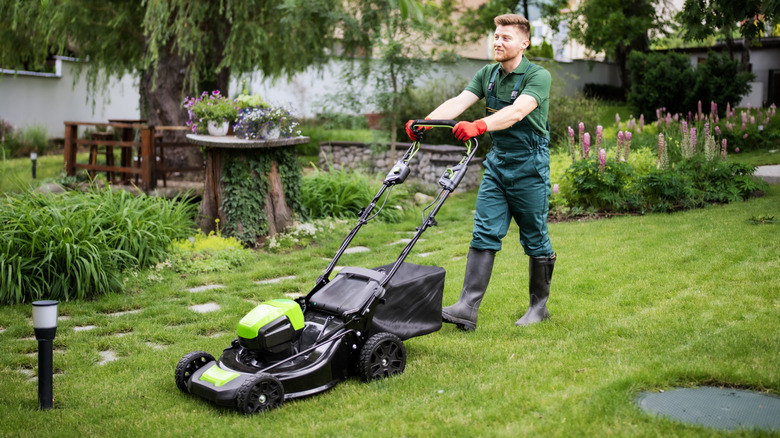
Cordless battery mowers use lithium-ion batteries ranging from 20V to 80V and give you complete freedom to roam your yard. Most models run 30 to 90 minutes per charge, which handles up to half an acre on flat ground.
High-end brands like EGO Power+ and Greenworks offer self-propelled models with smooth speed control and LED lights for early or late mowing sessions. A major advantage is the shared battery platform many brands use, allowing you to power your trimmer, blower, and other tools with the same battery pack.
Robotic Lawn Mowers
Robotic mowers represent the ultimate in hands-free lawn care. Models like the Navimow i105 use AI mapping and over 150 sensors to navigate your yard safely without human intervention.
These mowers operate at just 58 decibels, quieter than a normal conversation, and return to their charging stations automatically. With IP66 waterproofing and pet-safe designs, they’re perfect for busy homeowners who want consistently neat grass without lifting a finger.
Electric Riding Mowers
Battery-powered riding mowers are gaining popularity for medium to large properties. Some zero-turn electric models can mow up to 2 acres on a single charge, delivering near-silent operation with zero emissions.
While more expensive than gas equivalents, they appeal to homeowners prioritizing eco-friendliness, comfort, and reduced maintenance.
Types of Gas Mowers
Gas mowers remain the go-to choice for demanding lawn care situations. They fall into several categories based on how they’re powered and operated.
Push Gas Mowers
Push gas mowers require you to provide the forward motion while the engine powers the blade. They’re lightweight, affordable, and always ready to go—just fill the tank and pull the cord.
These work well for small to medium lawns up to half an acre on relatively flat terrain. Entry-level models start under $200, making them the budget-friendly choice for homeowners who don’t need advanced features.
Self-Propelled Gas Mowers
Self-propelled models use engine power to drive the wheels, significantly reducing physical effort. Variable speed controls let you match your walking pace, and they excel on sloped or uneven terrain where electric models may struggle.
These mowers deliver consistent power through thick or wet grass, making them favorites for larger yards with challenging conditions.
Riding Lawn Tractors
For properties over one acre, riding mowers become essential. With cutting decks ranging from 42 to 60 inches wide, they cover ground much faster than walk-behind models.
You sit and steer like a car, drastically reducing fatigue on large properties. Modern gas riding mowers increasingly include electric start, cruise control, and improved fuel efficiency.
Zero-Turn Gas Mowers
Zero-turn mowers pivot 180 or 360 degrees on the spot, offering maximum agility around trees, flower beds, and garden furniture. Their high-output engines power through tall grass and leaves with ease.
These combine speed, precision, and raw power, making them ideal for serious homeowners or professional landscapers with complex landscapes.
Cutting Performance Compared
How well a mower cuts grass matters more than most other factors. Consumer Reports testing reveals important differences between electric and gas models.
Clean Cut Quality
Gas mowers edge out electric models with a 4.7 versus 4.5 average score in cutting evenness. They deliver a flatter, more consistent cut, especially in tall, thick, or wet grass, thanks to higher torque and blade speed.
That said, top-tier electric mowers like the EGO 80V now match premium gas models, producing a carpet-like finish on well-maintained lawns.
Side Discharging Performance
Both types perform nearly identically for side discharging, earning “very good” ratings across the board. The key factor is deck design and airflow, not power source. Well-engineered models from both categories prevent clumping and ensure clean ejection.
Mulching Effectiveness
Gas mowers average 4.7 out of 5 for mulching, while electric models score 4.6. The real difference lies in consistency. Gas models recirculate clippings multiple times using powerful airflow, producing finely chopped mulch that feeds your lawn.
Electric mowers cannot re-cut clippings as effectively, leading to larger particles and less efficient nutrient return, especially in lower-end models.
Bagging Efficiency
Gas mowers have stronger suction, filling bags faster and reducing clogs. Their 4.6 top score beats electric’s 4.5, and they handle damp or dense grass better. Battery mowers may struggle with chute clearance, requiring more stops to empty the bag.
Handling and Maneuverability
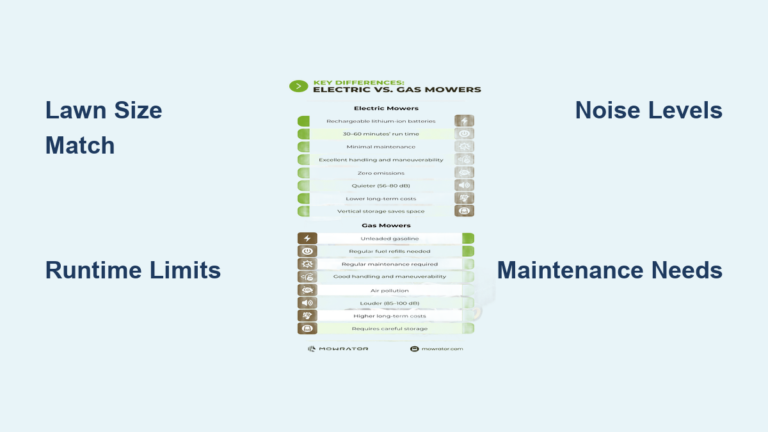
Electric mowers score 4.2 for handling versus 3.8 for gas. They’re lighter, easier to push, and more maneuverable in tight spaces. Self-propelled electric models offer smooth acceleration and effortless U-turns.
Gas mowers, especially those with all-metal decks, are heavier and can leave ruts on soft soil.
Runtime and Power Source Realities

Understanding runtime and power limitations prevents frustration during mowing sessions.
Battery Runtime Limits
Most cordless mowers run 45 to 50 minutes per charge, enough for a quarter-acre lawn. On flat, open lawns, some can handle half an acre. But in dense grass or on slopes, runtime drops significantly.
Two-thirds of tested models complete a quarter-acre cut on one charge. For larger yards, consider spare batteries or a high-capacity 80V system.
Recharge Time Considerations
Batteries typically recharge in under 1.5 hours. That downtime matters if you’re mowing a large lawn or need to cut again the same day. Some brands offer fast-charging options, like 30 minutes for 80%, but you can’t refuel instantly like with gas.
Battery Cost and Lifespan
Replacement batteries cost $100 to $300 or more and last 3 to 8 years, depending on use and storage. Keep them in a cool, dry place, as extreme heat or cold shortens their life.
The upside is interchangeable battery ecosystems. Brands like EGO or DeWalt let you use one battery across trimmers, blowers, chainsaws, and more, saving money long-term.
Gas: Instant and Unlimited
Gas mowers need no charging. Refueling takes seconds, and you’re back to work. Just use E10 or lower ethanol fuel and add stabilizer if storing over winter. No runtime anxiety makes gas perfect for large or overgrown lawns.
Noise and Environmental Impact
These factors affect your neighbors, your community, and the environment.
Gas Mowers: Loud and Polluting
Gas mowers average 2.2 noise score at ear level, with many exceeding 85 decibels, loud enough to require hearing protection. At 25 feet, they’re still 2.8, disturbing neighbors.
They emit carbon monoxide, NOx, and hydrocarbons. One hour of mowing pollutes like several cars. That’s why California and other states are banning gas-powered equipment.
Electric Mowers: Quiet and Clean
Electric models average 5.0 at ear and 5.3 at 25 feet. The noisiest electric is still quieter than the quietest gas mower. Most operate between 54 to 80 decibels, like a vacuum or fan.
You can mow early or late without complaints. They produce zero direct emissions, aligning with eco-regulations and climate goals.
Maintenance Requirements
The effort required to keep your mower running affects your long-term satisfaction and costs.
Gas Mower Upkeep
Expect annual maintenance including oil changes, spark plug replacement every 2 to 3 years, air filter cleaning, and fuel stabilization or drainage. If you leave old gas in the tank, you risk carburetor clogs or flooded engines.
Tipping the mower can cause fuel leaks. Winterization is essential in cold climates.
Electric Mower Care
Electric mowers require minimal maintenance. No oil, no spark plugs, no fuel system. Just sharpen the blade annually and rinse the deck while avoiding electrical parts.
Batteries need no maintenance but should be stored at room temperature. No winter prep is needed.
Design and Usability Differences

How a mower feels and performs affects your mowing experience.
Weight and Maneuverability
Electric mowers are lighter, reducing fatigue and preventing ruts on soft lawns. Their compact design helps with tight turns and U-turns. Gas mowers, with engines and fuel, are heavier and harder to push, especially uphill.
Storage Considerations
Electric models often stand vertically, saving garage space. Foldable handles add to compact storage. Gas mowers need horizontal storage and ventilation due to fuel vapors. They take up more room and shouldn’t be stored indoors without proper venting.
Convenience Features
Electric mowers offer push-button start, LED lights, and app connectivity on robotic models. Gas mowers provide self-propulsion and consistent power without downtime. No more pull-cord struggles with electric mowers.
Cost Analysis
Understanding both upfront and long-term costs helps you make a financially sound decision.
Upfront Price Comparison
Entry-level gas mowers start under $200. Electric models, especially 40V-plus self-propelled types, often cost $50 to $150 more. But prices are converging as battery technology improves.
Long-Term Ownership Costs
Gas mowers incur ongoing costs for fuel, oil, spark plugs, filters, and stabilizer. Electric mowers have no fuel costs and minimal upkeep. Over 5 to 10 years, electric is typically $200 to $400 cheaper to own.
Factor in battery replacement every 3 to 5 years.
Battery Ecosystem Value
Buying into a shared battery platform pays off. Use one 80V battery for your mower, trimmer, blower, and chainsaw. Tools sold bare, without battery, save money if you already own the system.
Who Should Choose Which Mower
Your specific situation determines which mower type serves you best.
Choose Electric If
Choose electric if you have a lawn under half an acre, want quiet and emission-free mowing, value easy start and low maintenance, live in a noise-sensitive neighborhood, or already own battery-powered tools.
Choose Gas If
Choose gas if your lawn is over half an acre, especially over one acre, you mow thick or overgrown grass, you need maximum mulching and leaf-shredding power, you prefer unlimited runtime and instant refueling, or you’re okay with annual maintenance and louder operation.
The Hybrid Strategy
Many users keep both mowers. Use electric for weekly spring and summer cuts, then switch to gas for fall leaf cleanup and heavy-duty jobs. This extends the life of both machines and maximizes performance year-round.
Real-World User Experiences
Hearing from actual users helps set realistic expectations.
Electric users love the quiet start, clean storage, and no fumes. Their complaints focus on runtime limits and long recharges. Gas users praise power and reliability but hate noise, pull-starts, and maintenance.
One Honda gas mower lasted 15 years with repairs. An EGO 80V battery mower served 5 to 11 years, with battery replacement being the main cost. Robotic mowers like Navimow i105 get high marks for precision, safety, and automation.
The Future of Mowing
Battery technology is advancing fast, with longer runtimes, faster charging, and higher power. Gas mower bans are spreading, especially in California and urban areas.
Smart features like AI navigation and app control are now standard on electric models. Major brands like Honda, ECHO, and Greenworks now offer competitive electric lines.
While gas still rules for large, tough lawns, electric is becoming the default choice for most homeowners. Convenience, quietness, and eco-benefits are winning the day.
Key Takeaways for Your Mower Decision
For most homeowners, a battery-powered electric mower offers the best balance of performance, ease of use, cost savings, and environmental friendliness. If you have a small to medium lawn, it’s the clear winner.
For large properties over one acre or demanding conditions, a gas-powered self-propelled or riding mower remains the most practical option.
For ultimate convenience, a robotic electric mower delivers daily, hands-free maintenance with smart safety features.
Choose based on your real needs, not just the specs. Your perfect mower is out there.
Frequently Asked Questions About Electric vs Gas Mower
How long do electric mower batteries last?
Most lithium-ion batteries last 3 to 8 years, depending on usage and storage conditions. Proper care, like storing batteries at room temperature and avoiding extreme heat or cold, extends their lifespan significantly.
Can electric mowers handle thick grass?
High-voltage electric mowers, particularly 80V models like EGO, can handle thick grass effectively. However, battery mowers may bog down in dense or wet grass compared to gas models, which deliver more consistent power under heavy loads.
Are gas mowers being banned?
Several states and municipalities are restricting or banning gas-powered lawn equipment. California has implemented bans on gas-powered small off-road engines, and more regions are following suit due to emissions concerns.
Which mower is better for a half-acre lawn?
Both electric and gas mowers can handle a half-acre lawn. Electric cordless mowers typically run 45 to 50 minutes per charge, which covers this size on flat terrain. Gas mowers offer unlimited runtime but require more maintenance.
Do electric mowers require less maintenance than gas mowers?
Yes, electric mowers require significantly less maintenance. You only need to sharpen the blade annually and keep the battery charged. Gas mowers require annual oil changes, spark plug replacements, air filter maintenance, and fuel system care.
Which mower type lasts longer?
Gas mowers can last 10 to 15 years or more with proper maintenance. Electric mowers typically last 5 to 11 years, with battery replacement being the primary long-term cost. The mechanical simplicity of electric mowers reduces failure points, but the battery ultimately determines usable lifespan.