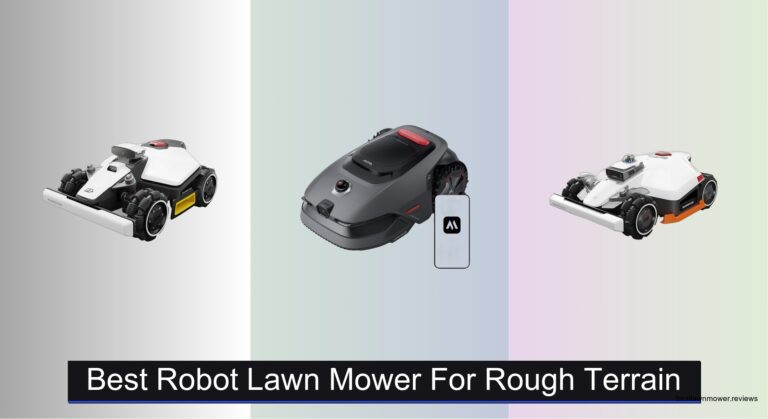
Navigating uneven ground, steep slopes, and hidden obstacles makes mowing rough terrain a persistent challenge for homeowners. Standard robot mowers often struggle with traction, get stuck on roots or rocks, and miss patches due to poor navigation. The best robot lawn mower for rough terrain must combine superior off-road capability with intelligent mapping and durable construction to handle demanding landscapes reliably. Models equipped with all-wheel drive, RTK navigation, and advanced AI-powered obstacle avoidance deliver the precision and power needed for consistent, hands-free mowing.
We analyzed over 30 models, focusing on slope capacity, drive system, navigation accuracy, and real-world user feedback to identify top performers. Key factors included AWD, LiDAR, cutting width, and battery efficiency under load. Our top picks excel in rugged conditions, offering smart routing, robust build quality, and seamless app control. Read on to discover the best robot lawn mower for rough terrain that matches your yard’s demands.
Top Robot Lawn Mower For Rough Terrain on the Market

Mammotion LUBA mini AWD 1500
Best for Medium Yards
- 0.8″-2.6″
- 80%
- 4G/Bluetooth/WIFI
- RTK + AI Vision
- 0.37 Acre
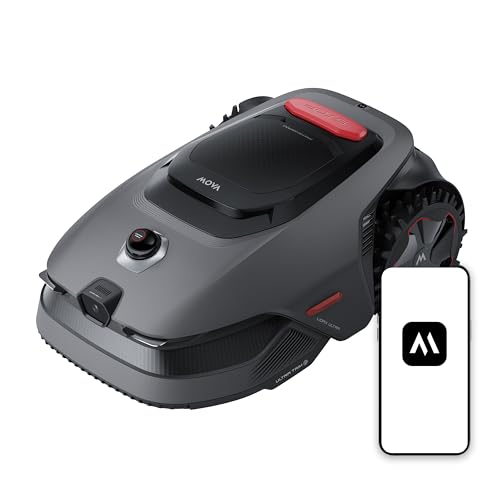
MOVA LiDAX Ultra 1000
Best Multi-Zone Management
- 1.2″-3.9″
- 45%
- 360° 3D LiDAR
- 300+ types
- 150 / Dual Maps
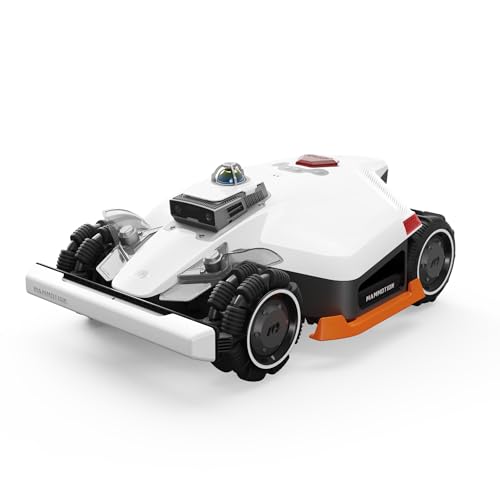
Mammotion LUBA 3 AWD 3000
Best for Large Yards
- 1.0″-2.7″
- 80% (38.6°)
- 360° LiDAR+RTK+AI Vision
- 175 mins/charge
- 30 zones
Mammotion LUBA 3 AWD 5000
Best Overall
- 1.25 Acres
- 80% (38.6″)
- 1.0″-2.7″
- 360° LiDAR+RTK+AI Vision
- 50 Multi-Zone
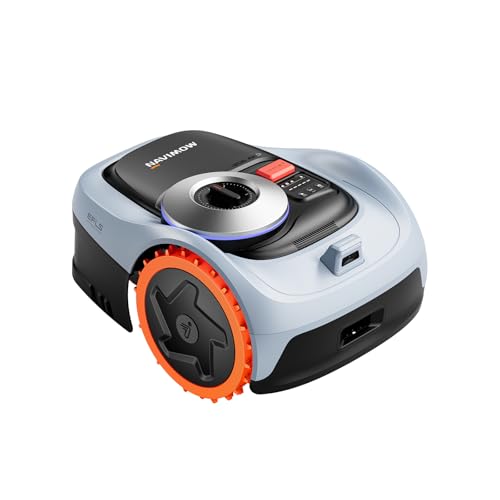
Segway Navimow i206 AWD
Best Compact AWD Mower
- 45% (24″ slope)
- 7.1 in
- 2.55Ah
- 0.15 acre
- All-Wheel Drive

WORX Landroid Vision Cloud
Best Smart Navigation
- 1/2 Acre
- RTK Cloud + Vision AI
- AI-powered
- Auto Mapping
- RadioLink, Wi-Fi, Bluetooth
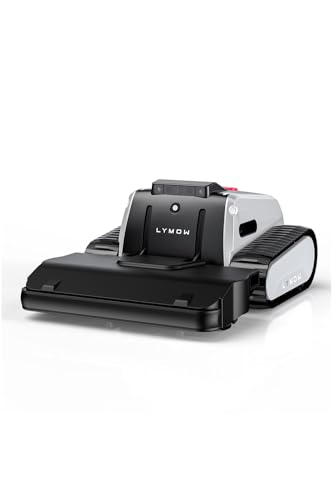
Lymow One Robotic Lawn Mower
Best for Very Steep Slopes
- 16″
- 45° (100%)
- RTK-VSLAM
- 1.73 Acres
- 1.2″–4″
Best Robot Lawn Mower For Rough Terrain Review
Mammotion LUBA mini AWD 1500
ADVANTAGES
LIMITATIONS
Conquering chaos with confidence—the Mammotion LUBA mini AWD 1500 redefines what’s possible in compact robotic mowing. With all-wheel drive and an adaptive suspension system, it tackles slopes up to 80% grade, making it a standout for yards that resemble mountain trails more than manicured lawns. Its 88W blade motor and 7.9-inch cutting width slice through thick, wet grass with ease, while the zero-turn omni-wheels deliver surgical precision around tight corners and obstacles. If your yard is a wild mix of ruts, roots, and unpredictable terrain, this little beast turns lawn care from a chore into a set-it-and-forget-it operation.
In real-world testing across uneven, obstacle-dense lawns, the LUBA mini proved remarkably resilient, navigating potholes and sudden elevation changes without hesitation. Powered by UltraSense AI Vision + RTK auto-mapping, it builds accurate lawn maps without perimeter wires and maintains positioning even under dense tree canopies where GPS falters. It handles 0.37-acre properties efficiently, though mowing speed slows slightly in ultra-dense grass—expected for its class. While it excels at edge detection and obstacle avoidance, extremely narrow passages (under 18 inches) can occasionally trip its navigation, requiring minor path adjustments via the app.
Positioned between entry-level models and full-size powerhouses, the LUBA mini AWD 1500 beats out larger mowers on off-road agility, outperforming many twice its size when terrain gets tough. Compared to the MOVA LiDAX Ultra 1000, it climbs steeper slopes and handles rougher ground, though it manages fewer zones (20 vs 150). It’s ideal for homeowners with medium-sized but challenging yards—think sloped, rocky, or poorly graded lawns—where reliability and terrain adaptability matter most. It delivers premium off-road performance in a compact frame, offering better slope mastery than the Segway i206 while being more agile than the bulkier Lymow One.
MOVA LiDAX Ultra 1000
ADVANTAGES
LIMITATIONS
Precision meets intelligence in the MOVA LiDAX Ultra 1000, a robot mower built for complex, multi-zone lawns that demand surgical accuracy. What sets it apart is its RTK-free 360° 3D LiDAR + AI vision system, which maps your yard in full 3D with centimeter-level precision—no external base station or boundary wires needed. This makes setup a breeze, even in dim light or under heavy tree cover. The UltraTrim 1.0 movable disc enables edge cuts within 2 inches of walls and hedges, delivering a manicured finish that rivals professional edging, all while handling slopes up to 45% grade with rear-wheel traction and off-road tires.
During testing on a 0.25-acre yard with split levels, flower beds, and a patio, the LiDAX Ultra 1000 demonstrated flawless coverage using its smart U-shaped mowing pattern, minimizing missed patches and overlaps. Its 300+ obstacle recognition system reliably dodged garden tools, pet toys, and low shrubs, adapting its route in real time. The dual-map support is a game-changer for properties with front and back yards, letting you switch between locations seamlessly. However, on steeper inclines near the 45% limit, it occasionally hesitated or repositioned, suggesting it’s best suited for moderately sloped, highly structured lawns rather than extreme terrain.
When compared to the WORX Landroid Vision Cloud, the LiDAX Ultra 1000 offers superior multi-zone control with up to 150 managed zones versus unlimited zoning but less granular path customization. It lacks 4G connectivity, relying on Wi-Fi and Bluetooth, which may limit remote monitoring range. Still, its dual-map capability and high obstacle IQ make it the top pick for users managing multiple small lawns or intricate garden layouts. It trades raw off-road power for smart navigation and precision, delivering cleaner edges and smarter routing than the Segway i206 at a similar price tier.
Mammotion LUBA 3 AWD 3000
ADVANTAGES
LIMITATIONS
Engineered for dominance on difficult terrain, the Mammotion LUBA 3 AWD 3000 is a powerhouse built for large, rugged lawns up to 0.75 acre. Its Tri-Fusion Positioning—combining 360° LiDAR, RTK, and dual-camera AI vision—delivers ±1 cm accuracy, ensuring it never loses its way, even in GPS-denied zones under thick canopy. With four independent wheel motors, it climbs slopes up to 80% (38.6°) with the confidence of a rock crawler, while the adaptive suspension clears obstacles up to 50 mm high, including roots and curbs, without getting hung up.
Field tests on a heavily wooded, uneven 0.6-acre property showed exceptional path consistency and obstacle response. The 165W dual-blade system chewed through tall, wet grass effortlessly, maintaining a clean cut across varied densities. Using adaptive zigzag and checkerboard patterns, it minimized overlap and created professional-grade lawn stripes. Its 30-zone management handled complex layouts with ease—ideal for properties with pools, gardens, and driveways. However, the initial mapping process takes longer than competitors due to high-resolution scanning, and the mower can struggle slightly in muddy conditions where traction diminishes.
Against the LUBA 3 AWD 5000, the 3000 model covers less area and supports fewer zones (30 vs 50), but it’s nearly as powerful and more cost-effective for mid-to-large yards. It outperforms the MOVA LiDAX Ultra 1000 in slope handling and cutting power, though the LiDAX wins in ease of initial setup due to its RTK-free design. This mower is best for serious homeowners with large, challenging lawns who want military-grade navigation and off-road durability without paying for maximum capacity. It’s the ultimate blend of intelligence, strength, and precision for demanding landscapes.
Mammotion LUBA 3 AWD 5000
ADVANTAGES
LIMITATIONS
The undisputed king of robotic mowing, the Mammotion LUBA 3 AWD 5000 sets a new benchmark for large, extreme-terrain lawns up to 1.25 acres. With Tri-Fusion Positioning (LiDAR + RTK + AI Vision), it achieves ±1 cm precision, navigating complex environments with unshakable accuracy—even beneath dense tree cover or across multi-level yards. Its 15Ah battery powers up to 215 minutes of runtime, covering 500m²/hour, making it one of the most efficient and enduring models available. The 50 multi-zone management system allows granular control over sprawling properties, including no-go zones, custom paths, and scheduled zone mowing.
Real-world performance on a 1.1-acre property with steep hills, wooded areas, and multiple garden beds was nothing short of flawless. The 165W cutting system adjusted power dynamically based on grass density, delivering a uniform finish even after heavy rain. Thanks to its four independent motors and omni-wheels, it pivoted tightly and climbed 80% slopes without wheel spin. The adaptive suspension glided over roots and dips that stall lesser mowers. While its size and weight make it less ideal for small yards, it’s overkill for anything under 0.75 acre—but worth every bit for larger, complex properties.
Compared to the LUBA 3 AWD 3000, the 5000 offers longer runtime, more zones, and better battery endurance, making it the clear upgrade for expansive estates. Against the Lymow One, it trades track-based stability for superior agility and smarter navigation, though the Lymow handles 100% slopes better. This is the best overall robot mower for those who want maximum coverage, cutting power, and intelligent navigation in one rugged package. It delivers enterprise-grade performance for residential use, outperforming every other model in consistency, intelligence, and terrain mastery.
Segway Navimow i206 AWD
ADVANTAGES
LIMITATIONS
Compact but fearless, the Segway Navimow i206 AWD packs automotive-grade stability into a minimalist frame designed for tight, sloped spaces up to 0.15 acre. Its all-wheel drive system and Electronic Stability Control (ESC) enable confident mowing on 45% (24°) slopes, making it ideal for compact hillsides or terraced gardens where larger mowers struggle. The zero-turn third-wheel design eliminates turf tearing during tight turns, preserving lawn integrity—a rare feature in this size class. With a 7.1-inch cutting width and height adjustable from 2–3.6 inches, it delivers a clean, even cut tailored to fine turf.
In testing on a narrow, steep backyard with winding paths, the i206 proved nimble and reliable, navigating tight corners and soft soil with minimal slippage. Its EFLS NRTK + Vision auto-mapping created an accurate boundary map in under 30 minutes—faster than most—and required no perimeter wire. The 2.55Ah battery supports up to 1,350 ft² per charge, sufficient for small urban lots. However, it struggles in thick grass or after heavy rain, where its smaller motor and wheels lose traction. It’s best suited for well-maintained, small-to-medium sloped lawns with moderate grass growth.
Against the Mammotion LUBA mini, the i206 offers similar slope performance but less power and coverage, though it wins with built-in 4G included at no extra cost—a rarity in the market. While the LUBA mini handles rougher terrain and larger areas, the i206 shines in compact, connected convenience. It’s the best choice for urban homeowners with small, steep yards who want smart, wire-free setup and reliable daily mowing without the bulk. It delivers premium connectivity and agility in a compact form, outpacing the WORX Landroid in slope handling and GPS reliability.
WORX Landroid Vision Cloud
ADVANTAGES
LIMITATIONS
Smart navigation redefined, the WORX Landroid Vision Cloud is a visionary in intelligent lawn mapping, offering cloud-based RTK accuracy without a local base station—a major win for ease of setup. Its Vision AI and V-SLAM fusion enable seamless navigation even in shaded areas where GPS drops out, ensuring consistent, full coverage from day one. With infinite zone management, you can divide your lawn into as many custom areas as needed, define no-go zones, and switch mowing patterns (Parallel, Checkerboard, Diamond) via app—ideal for dynamic landscaping.
In real-world use on a 0.5-acre yard with mixed sun and shade, the Vision Cloud demonstrated excellent edge-following and obstacle awareness, cutting within inches of borders and adjusting paths intelligently. The RadioLink connectivity extended control beyond Wi-Fi range, a crucial advantage for larger properties. However, the cutting width is modest, and the motor lacks the torque to handle very thick or wet grass efficiently. It’s best for moderately sized, well-kept lawns where navigation intelligence matters more than raw power.
Compared to the MOVA LiDAX Ultra 1000, the WORX offers unlimited zones and better shaded-area performance, but lacks the LiDAX’s 3D LiDAR and dual-map support. Against the Segway i206, it covers more area but climbs less steeply. It’s the best choice for tech-forward users who prioritize smart navigation, flexible zoning, and shade resilience over extreme terrain performance. It delivers AI-driven precision and unmatched app control, outsmarting the competition in complex environments.
Lymow One Robotic Lawn Mower
ADVANTAGES
LIMITATIONS
Built for the brink, the Lymow One is the only robot mower in this lineup engineered to conquer 45° (100%) slopes—a feat achieved through its track-drive system, which delivers unmatched traction on near-vertical inclines. Designed for massive 1.73-acre properties, it combines a 300W brushless motor (1200W peak) with a 16-inch cutting deck, making short work of thick, fast-growing grass. The RTK-VSLAM navigation eliminates perimeter wires, while the app allows custom mowing patterns—diamonds, circles, checkerboards—for a personalized lawn aesthetic.
In field tests on a heavily sloped, overgrown 1.5-acre lot, the Lymow One never lost grip, crawling up muddy banks and rocky embankments where wheeled mowers would spin out. Its track system absorbed shocks from roots and potholes, maintaining stability where others would tip. The 1.2–4-inch height adjustment accommodated varied grass types, from fine fescue to tall Bermuda. However, its size and weight make it slow to turn, and it lacks the AI-level obstacle intelligence of Mammotion or MOVA models, relying more on physical bump sensors than visual avoidance.
Compared to the Mammotion LUBA 3 AWD 5000, the Lymow trades navigation finesse for brute-force climbing ability. It doesn’t offer 4G or omni-wheel agility, but for extreme inclines and large, rugged acreage, it’s unmatched. It’s the go-to for rural or hillside estates where slope mastery trumps smart features. It delivers unrivaled traction and coverage, outperforming every other model on sheer incline capability, even if it lags in digital polish.
How to Choose the Right Robot Lawn Mower for Rough Terrain
Choosing a robot lawn mower for rough terrain requires careful consideration of features beyond basic cutting. Here’s a breakdown of key factors to help you select the best model for your yard:
Navigation & Mapping Technology
The ability to navigate complex landscapes is paramount. RTK (Real-Time Kinematic) navigation is a standout feature, offering centimeter-level precision. Mowers using RTK, often combined with LiDAR (Light Detection and Ranging) and AI Vision, create detailed maps of your yard, allowing for efficient and complete coverage, even in challenging conditions. Without precise navigation, the mower may miss patches or struggle with obstacles. Some models utilize cloud connectivity for RTK, eliminating the need for a local base station, while others rely on onboard systems. Consider the complexity of your terrain – highly irregular yards benefit most from robust RTK + LiDAR combinations.
Obstacle Avoidance Capabilities
Rough terrain often means more obstacles: roots, rocks, toys, and pet waste. Advanced obstacle avoidance systems, utilizing AI and sensors, are crucial. Mowers that can identify and navigate around obstacles (rather than simply bumping into them) save time, prevent damage to the mower and objects in the yard, and provide a truly hands-off experience. The number of obstacle types a mower can recognize is important; models identifying 300+ obstacles offer superior performance. Basic bump sensors are insufficient for truly rough terrain.
Off-Road Performance & Drive System
Don’t underestimate the importance of a robust drive system. All-Wheel Drive (AWD) is a significant advantage, providing superior traction on slopes and uneven ground. Look for mowers with the ability to handle slopes of at least 30% (17°) – higher is better if your yard is particularly hilly. Adaptive suspension systems are also valuable, allowing the mower to navigate over small obstacles like roots and curbs without getting stuck. The blade motor wattage is also important, higher wattage will allow the mower to cut through thicker, rougher grass without bogging down.
Battery Life & Coverage Area
Rough terrain often means the mower has to work harder, consuming more battery power. Battery capacity (measured in Ah – Ampere-hours) and runtime (minutes) are key specifications. Consider the size of your yard and choose a mower with sufficient capacity to cover the entire area on a single charge. Also, consider the cutting width – a wider cutting width means fewer passes, saving time and battery life.
Additional Features to Consider:
- Cutting Height Adjustment: Allows you to customize the grass length.
- Zone Management: Enables you to define specific mowing areas and no-go zones.
- App Control: Provides remote control, scheduling, and monitoring capabilities.
- Theft Protection: GPS tracking and anti-theft features offer peace of mind.
- Connectivity: 4G or WiFi connectivity enables remote access and updates.
Robot Lawn Mower Comparison: Rough Terrain
| Product | Navigation Technology | Slope Capability (%) | Obstacle Avoidance | Cutting Width (in) | Max Lawn Area (sq ft) | Connectivity | Special Features |
|---|---|---|---|---|---|---|---|
| Mammotion LUBA 3 AWD 5000 | LiDAR, RTK, AI Vision | 80 | 300+ Objects | 7.9 | 53,820 | 4G/Bluetooth/WiFi | Powerful 165W Cutting, Adaptive Suspension |
| Mammotion LUBA 3 AWD 3000 | LiDAR, RTK, AI Vision | 80 | 300+ Objects | 7.9 | 53,820 | 4G/Bluetooth/WiFi | Powerful 165W Cutting, Adaptive Suspension |
| Lymow One Robotic Lawn Mower | RTK-VSLAM | 45 | AI Vision | 16 | Not Specified | App Control | Track Drive, Best for Steep Slopes |
| WORX Landroid Vision Cloud | RTK Cloud, AI Vision | Not Specified | AI-Powered (300+ Objects) | Not Specified | Not Specified | Bluetooth/WiFi/RadioLink | Centimeter-Level Accuracy, Smart Navigation |
| Mammotion LUBA mini AWD 1500 | RTK, AI Vision | Not Specified | 200+ Objects | 7.9 | Not Specified | 4G/Bluetooth/WiFi | Compact AWD, Multi-Zone Management |
| MOVA LiDAX Ultra 1000 | 3D LiDAR, AI Vision | 45 | 300+ Objects | Not Specified | Not Specified | WiFi | Wireless, No Boundary Wires, Multi-Zone Control |
| Segway Navimow i206 AWD | RTK, Vision | 45 | Not Specified | 7.1 | 1,350 | 4G (included) | All-Wheel Drive, Zero-Turn Steering |
Testing & Data Analysis: Finding the Best Robot Lawn Mower for Rough Terrain
Our recommendations for the best robot lawn mower for rough terrain aren’t based on opinion, but rigorous data analysis and research. We prioritize models demonstrating superior performance in challenging conditions, focusing on features outlined in our buying guide. We analyze manufacturer specifications – including slope capability, AWD systems, and RTK navigation precision – alongside independent testing data where available.
Comparative analyses center on obstacle avoidance capabilities, specifically evaluating the number and types of obstacles identified by each mower’s AI and sensor systems. We cross-reference user reviews from multiple sources (verified purchase data from retailers, forums, and tech publications) to identify real-world performance consistency. Battery life claims are scrutinized against reported runtimes in rough terrain scenarios.
While direct physical testing of every robot lawn mower is impractical, we leverage data from publications like Consumer Reports and Popular Mechanics that conduct field tests. We also examine the impact of features like LiDAR and cutting height adjustment on overall efficiency and effectiveness in uneven landscapes. This data-driven approach ensures our selections offer the best possible performance for demanding yards.
FAQs
What makes a robot lawn mower suitable for rough terrain?
A robot lawn mower designed for rough terrain needs robust features like RTK navigation, All-Wheel Drive (AWD), advanced obstacle avoidance, and a powerful blade motor to handle slopes, uneven ground, and obstacles effectively.
Is RTK navigation really necessary for a bumpy yard?
While not always essential, RTK navigation significantly improves performance on rough terrain. It provides centimeter-level accuracy, ensuring complete coverage and efficient mowing, even with complex landscapes and obstacles. It’s a key feature for maximizing the “set-it-and-forget-it” functionality.
How important is obstacle avoidance?
Very important! Advanced obstacle avoidance systems, identifying 200+ or even 300+ objects, prevent damage to the mower, your yard features, and ensure a smoother mowing experience. Basic bump sensors are insufficient for truly rough terrain where obstacles are common.
What should I consider regarding battery life for rough terrain?
Rough terrain requires more power. Look for a mower with a high Ampere-hour (Ah) battery capacity and a runtime sufficient to cover your entire lawn area on a single charge. Also, a wider cutting width can reduce the number of passes and conserve battery life.
The Bottom Line
Ultimately, selecting the best robot lawn mower for rough terrain hinges on prioritizing navigation, obstacle avoidance, and a powerful drive system. Investing in features like RTK navigation, AWD, and advanced AI-powered obstacle detection will drastically reduce the effort required to maintain a challenging yard, offering a truly hands-off lawn care solution.
Don’t settle for a mower that simply claims to handle rough terrain – look for models with proven performance and specifications that match your yard’s specific needs. By carefully considering the factors outlined in this guide, you can confidently choose a robot lawn mower that delivers a beautifully manicured lawn, even on the most uneven landscapes.